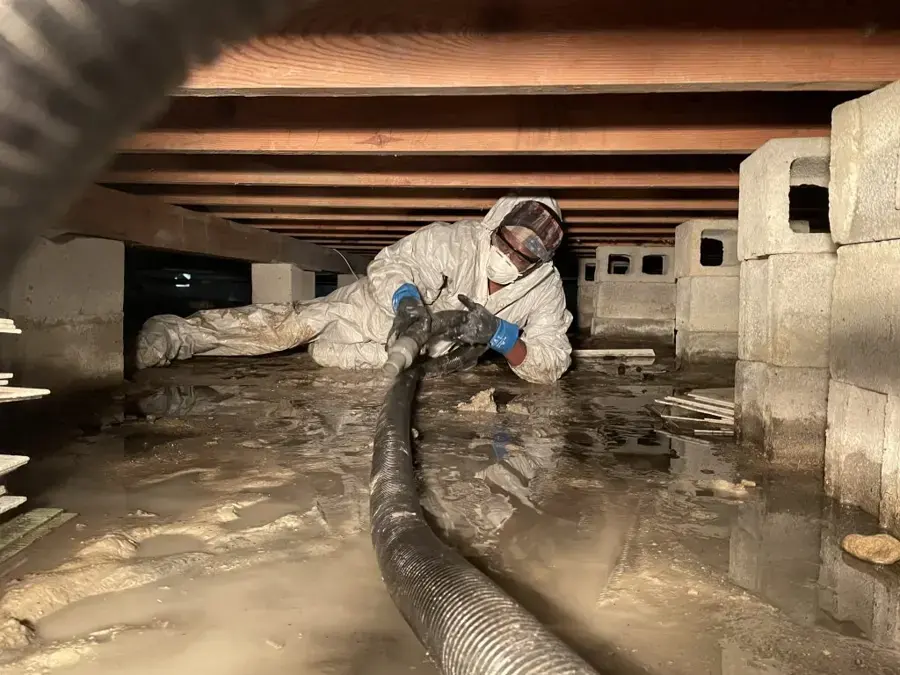
Lancaster gets about 45 to 48 inches of rain a year, including summer thunderstorms and the remnants of tropical systems. Many houses in the city sit on crawl-space foundations over Piedmont clay, so a wet week can leave water under the floor where nobody looks. This post covers how to tell standing water from damp air, what to do first and how a crawl space is pumped and dried.
Key takeaways
- Standing water, wet insulation or a musty smell under the floor means the crawl space has taken on water, even when the rooms above look normal.
- Rain is one cause, but a leaking pipe, drain or water heater can add water on a dry day, so find the source before anything else.
- Stay out of a wet crawl space until the power is off and the wiring is clear of the water.
- Pumping is only the first step: soaked insulation and vapor barrier come out, and the joists and subfloor are dried until the readings match dry wood.
- Stopping repeat water means fixing grading or gutters outside the house, which is a separate job from the dry-out.
Why Lancaster crawl spaces collect water
A crawl-space foundation is a raised wood floor over open ground, and Piedmont clay drains slowly. When rain keeps falling, the soil around the house stays saturated and water finds the lowest place to settle.
Lancaster's yearly rain, about 45 to 48 inches, includes summer thunderstorms and the remnants of tropical systems. A storm that stalls over the area can soak the ground for days, and creek water that reaches the yard is a job for storm and flash flood cleanup.
Where the water comes from
- Runoff: a yard that slopes toward the house sends rain under the foundation.
- Roof water: gutters and downspouts that empty beside the wall soak the same ground.
- Wet ground citywide: Bear Creek and Cane Creek drain the city toward the Catawba River, and the same rain saturates soil across town.
- Plumbing: a leaking supply pipe, drain or water heater under the floor adds water even when the sky is clear.
Why it matters upstairs
Water under the floor wets the joists and subfloor and raises humidity in the rooms above. Hardwood can cup, tile can loosen and closets can start to smell damp.
How to tell standing water from damp air
A little moisture on the soil after a long rain is one thing. Water that stands, insulation that sags and a smell that reaches the rooms are another, and the difference decides whether a crawl space only needs time to dry or needs a crew.
Damp air versus standing water
- Damp air: the soil is dark, the vapor barrier lies flat and the smell fades as the weather dries.
- Standing water: water pools in low spots, the barrier lifts or the insulation sags, and the smell stays.
Signs from the access door
- Water or a dark sheen on the soil or the vapor barrier
- Insulation hanging down, soaked or sitting in water
- A vapor barrier pushed up, floating or torn
- A musty smell near floor vents or in closets above
- Soft, bouncy or cupped flooring, or doors that start to stick
Safety before looking
Wiring and ductwork run through many crawl spaces. If the water is deep or touches wiring, stay out and call an electrician.
Power should be switched off only from a dry panel, never by wading to reach it.
Water spreading right now?
Shut off the main if it is safe. The restoration team extracts, dries to the IICRC S500 goal and documents every step, 24/7.
First steps at the house
The first steps are about stopping new water and keeping people safe. Once the power and the source are settled, water extraction can begin.
- Check for a pipe: if water keeps appearing on a dry day, shut off the main water valve and see whether it stops.
- Photograph the water, the insulation, the vapor barrier and every wet room before anything is moved.
- Keep children and pets away from the access door and from any wet room.
- Skip the household vacuum and any extension cord that crosses wet ground.
- Write down the date and what the weather was doing, because that record supports a claim.
What pumping and drying involve
A full crawl space water removal job works from the access door inward and follows a set order.
Pump out and remove
- Standing water: pumped out with submersible pumps, then the last film is vacuumed up.
- Vapor barrier: torn or flooded plastic is removed so the soil can dry.
- Insulation: soaked or fallen batts between the joists are removed.
- Debris: mud and leaves that washed in are cleaned out.
Dry the framing
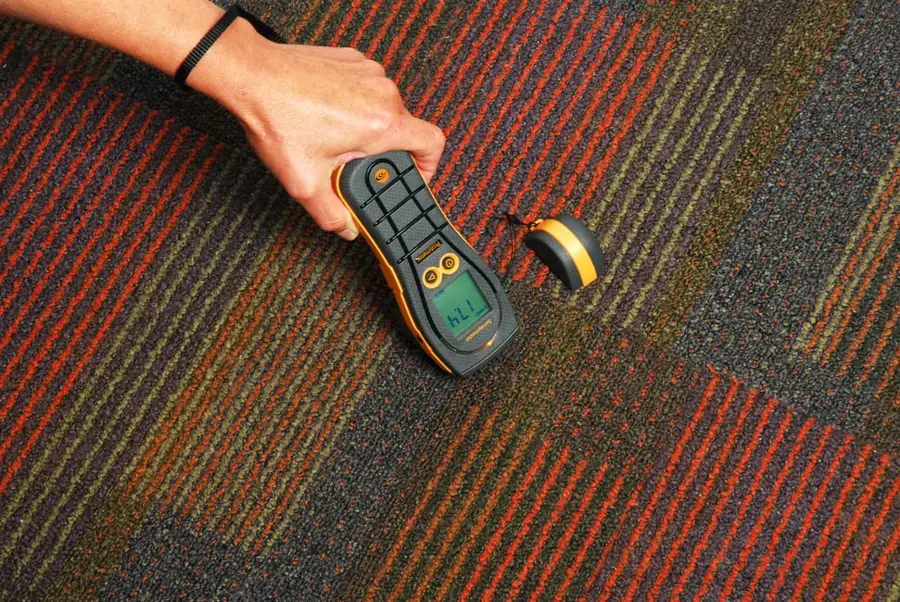
A dehumidifier set in the crawl space does most of the work, with air movers aimed at the wettest joists. Daily readings on the joists and subfloor show when they match dry wood elsewhere in the house.
Humid summer weather slows the process, which is why structural drying is ended by readings and not by the calendar.
When the water is not clean
Rain runoff and creek water carry soil and whatever else the ground holds, so they are not treated as clean-water losses. Restoration crews sort water into three categories, and the category decides what can be dried and what must come out.
- Category 1: water from a clean source such as a supply pipe, which can slip to a higher category if it sits.
- Category 2: water with significant contamination, such as appliance discharge.
- Category 3: grossly contaminated water, such as sewage from a broken drain or creek flooding.
Keeping water out afterward
Once the framing is dry, a repeat problem is solved outside the house, not under it. A drainage or roofing contractor handles those jobs, not the dry-out crew.
- Grading: the soil should slope away from the foundation.
- Downspouts: extend them so roof water lands away from the wall.
- Vents and access door: keep them in good repair so runoff does not pour in.
- Watching: look under the house after the next heavy rain.
Records that help a claim
Adjusters work from the file, so a clear record matters more than a long story. Coverage depends on where the water came from and on the policy wording, so the insurer is the one to ask.
- Dated photos and video of the water, the insulation and the vapor barrier
- The date of the heavy rain and notes on what the weather was doing
- The drying team's moisture readings, logged each day
- A list of what was removed, with rough ages
Questions
Is a damp crawl space after heavy rain normal?
A little moisture on the soil can appear after a long rain. Standing water, wet insulation, a floating vapor barrier or a musty smell in the rooms above means the space needs pumping and drying.
Can crawl space water damage the floors above?
Yes. Water under the house wets the joists and subfloor, which can cup hardwood, loosen tile and leave a damp smell in the rooms. Drying the framing protects the floors.
Does the vapor barrier have to be replaced?
A barrier that held standing water or tore during pumping is usually removed so the soil and framing can dry. A new one goes down once the readings are dry.
Should a homeowner go under the house to look?
Only from the access door, with a flashlight, and only if no water touches wiring. Deep water or a wet panel means stay out and call an electrician or the restoration team.
How long does the drying take?
It depends on how much is wet, how humid the weather is and what the daily readings show. The equipment stays until the joists and subfloor read dry.