Water Extraction and Removal in Lancaster, SC
The extraction crew pulls standing water out with truck-mounted and portable units, then sets drying equipment so floors, walls and the crawl space dry to the IICRC S500 goal.
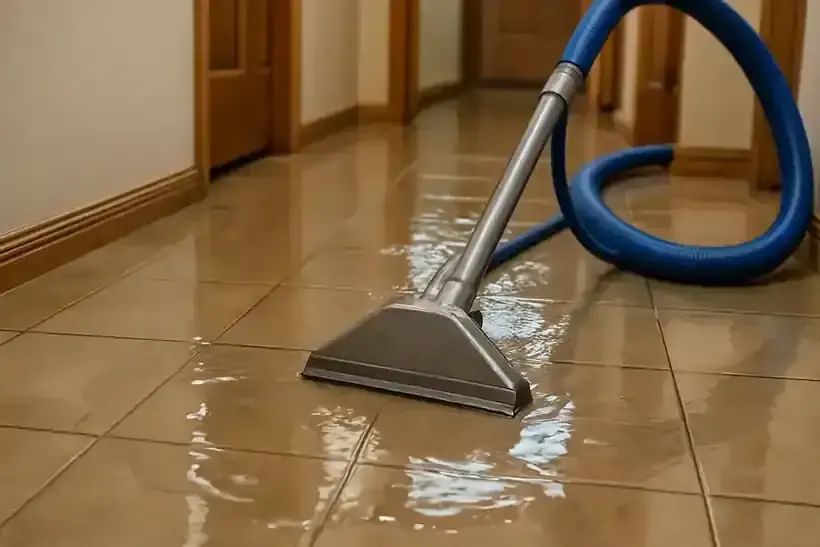
First steps for water extraction and removal in Lancaster
Stop the source: close the main valve or the fixture valve, and keep people and pets off wet carpet.
Move rugs, cushions and anything on the floor to a dry room, and set furniture legs on foil or blocks.
Skip the household vacuum on standing water. Call, and the extraction crew brings truck-mounted equipment.
How water extraction and removal is handled in Lancaster
Extraction is the first and cheapest part of any dry-out. A truck-mounted unit removes far more water than a shop vacuum, and every gallon pulled out of the carpet and pad is a gallon the dehumidifiers never have to chase.
In Lancaster the extraction crew also looks under the house, because water that runs through floor seams often ends up on the crawl space vapor barrier. The tech who does the walkthrough maps moisture first, so the extraction covers every wet area, not just the puddle that showed up.
What does water extraction and removal cost in Lancaster, SC?
Water extraction and drying in Lancaster, SC typically costs $1,000 to $4,500 for a one- to three-room loss. The water category, square footage, flooring type and how long the water sat move the price most.
One room, clean water
- Extraction of carpet and pad
- Three to four days of drying
- Daily moisture readings
Several rooms or wet subfloor
- Extraction across two or more rooms
- Pad removal and subfloor drying
- Dehumidifier in the crawl space
Gray or black water
- Removal of porous materials
- EPA-registered antimicrobial
- Containment where needed
Ranges are typical, not a quote: the water category, square footage, material class and how fast drying started move the number most. Run the Lancaster water damage cost calculator for a closer range.
The water extraction and removal process in Lancaster
Inspect and map
The tech who does the walkthrough finds the source, sets the water category and maps how far the water traveled with meters and thermal imaging.
Extract
The extraction crew pulls standing water with truck-mounted units and weighted tools, room by room, including the crawl space when water reached it.
Set drying equipment
Air movers and LGR dehumidifiers go in, sized to each room's evaporation load and the class of the loss.
Monitor and close out
The drying team logs readings every day and pulls equipment once materials reach the dry goal.
Why water extraction comes before drying
Air movers and dehumidifiers dry by evaporation, which is slow. Liquid water has to come out first, and the right tool depends on where it sits.
- Truck-mounted units: strong vacuum lift for carpet, pad and large rooms.
- Weighted extraction tools: the tech stands on the tool to press water out of carpet and pad.
- Submersible pumps: deep water in a crawl space, a garage or a sunken room.
- Portable units: upper floors and rooms the hoses cannot reach.
Standing water soaks deeper every hour
Truck-mounted extraction pulls water out of carpet, pad and subfloor before the drying starts.
Carpet, hardwood and tile in Lancaster homes
Each floor gives up water differently. Carpet and pad hold the most, hardwood cups as it soaks up water from below, and tile hides water in the grout and the subfloor under it.
Many Lancaster houses sit on crawl spaces over red clay, so water that soaks through a wood subfloor shows up on the vapor barrier and the joists. The extraction crew checks under the house before the drying plan is set, and pumps out anything sitting on the barrier.
What extraction saves and what comes out
Clean water caught early often leaves carpet and pad salvageable. Pad soaked by gray water usually comes out, and anything touched by sewage or storm runoff gets removed, not dried.
- Category 1 water: carpet and pad often dried in place.
- Category 2 water: pad removed, carpet cleaned and treated.
- Category 3 water: porous materials removed and bagged.
Water extraction and your insurance claim
The tech who does the walkthrough photographs the water before extraction starts and notes which rooms and materials were wet. Those photos, the moisture map and the daily drying logs go into the claim file. Fast extraction also protects indoor air, a point the EPA indoor air quality pages make about damp buildings. Coverage depends on your policy, so check with your own insurer.
Water extraction and removal across Lancaster and Lancaster County
Lancaster Water Damage Restoration covers ZIP 29720, 29721, 29722 in Lancaster 24/7, from Downtown and the Main Street historic district to the Lancaster Mill area, Springdale, Elgin and Erwin Farm.
Nearby coverage reaches Van Wyck, Indian Land, Heath Springs, Kershaw, Fort Lawn, Great Falls, Pageland.
Every Lancaster neighborhood and ZIP covered ›Water Extraction and Removal questions in Lancaster
How much water can a truck-mounted unit remove?
A truck-mounted extraction unit removes water far faster than a portable unit or a shop vacuum, which is why it handles large rooms and soaked carpet. Portable units cover upper floors and spaces the hoses cannot reach.
Can wet carpet be saved after water extraction?
Often, when the water is clean and extraction starts quickly. Pad soaked by gray water usually comes out, and carpet touched by sewage or storm runoff gets removed.
Should fans run before the extraction crew gets there?
Fans help a little, but they cannot remove standing water and can spread contaminated water. Extraction comes first, then drying equipment sized to the room.
Does water extraction include the crawl space?
When water ran through the floor, yes. The extraction crew checks under the house and pumps out water sitting on the vapor barrier before it soaks the joists.
How long until the floors are dry after extraction?
A contained Class 1 loss usually dries in three to five days after extraction. Hardwood, wet subfloor and crawl spaces take longer, and readings decide when equipment comes out.
Is water extraction covered by insurance?
Extraction after a sudden water loss is usually part of a covered claim, and the photos and readings support it. Coverage depends on your policy, so check with your own insurer.