Storm and Flash Flood Cleanup in Lancaster, SC
After a summer storm or a tropical downpour, the mitigation team pumps out runoff, removes mud and soaked materials and dries the structure, treating outside water as contaminated from the start.
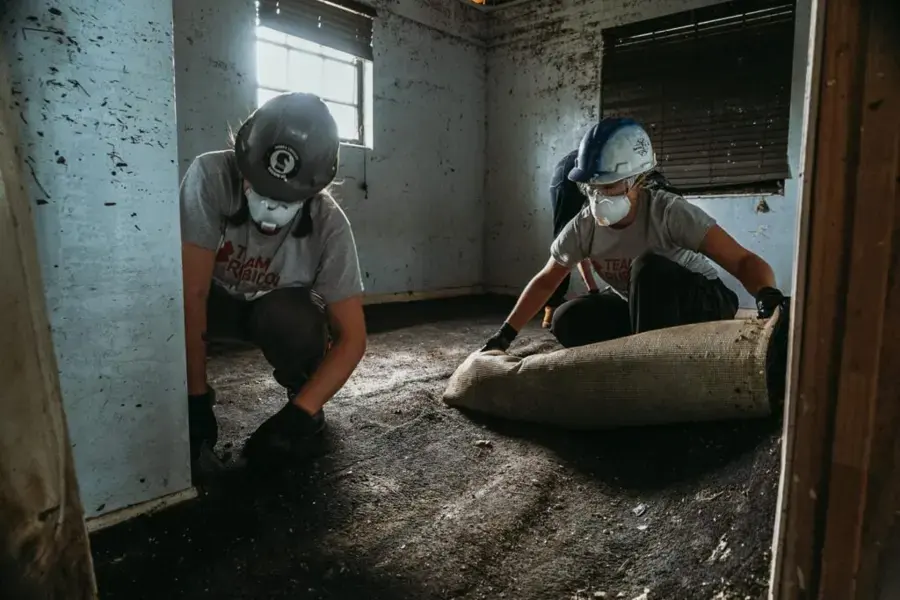
First steps for storm and flash flood cleanup in Lancaster
Stay out of flood water near outlets and the breaker panel, and keep children and pets away from it.
Photograph the high-water mark and the damage in every room before anything gets moved or thrown out.
Call before the mud dries. Wet silt is far easier to remove, and the mitigation team starts with pump-out.
Storm water inside a Lancaster home? Call before the mud dries.
(888) 532-8921 Start the Lancaster flood cleanupHow storm and flash flood cleanup is handled in Lancaster
Storm water that enters a house from outside carries soil, fertilizer, septic overflow and whatever the runoff crossed. The IICRC S500 standard treats it as Category 3, so the mitigation team plans removal first and drying second.
The crew pumps out standing water, shovels and squeegees the mud, cuts wet drywall above the high-water mark and removes soaked insulation and carpet. Only then do air movers and dehumidifiers go in, with readings logged daily until the framing is dry.
What does storm and flash flood cleanup cost in Lancaster, SC?
Storm and flash flood cleanup in Lancaster, SC typically costs $3,000 to $12,000, depending on how high the water rose, how many rooms it reached and how much mud and material has to come out.
Garage or one room
- Pump-out and mud removal
- Flood cuts and antimicrobial
- Drying with daily readings
Several rooms
- Carpet, pad and insulation removal
- Crawl space drying
- Contents moved and cleaned
Whole floor or crawl space and rooms
- Full mud-out and tear-out
- Desiccant or extra LGR capacity
- Itemized scope for the adjuster
Ranges are typical, not a quote: the water category, square footage, material class and how fast drying started move the number most. Run the Lancaster water damage cost calculator for a closer range.
The storm and flash flood cleanup process in Lancaster
Pump out
The extraction crew pumps out standing flood water from rooms, garages and the crawl space with trash pumps and truck-mounted units.
Mud-out and removal
The mitigation team removes silt, wet carpet, pad and insulation and cuts drywall above the high-water mark.
Clean and treat
Remaining framing and slab get cleaned and treated with an EPA-registered antimicrobial at its labeled dwell time.
Dry and verify
LGR dehumidifiers and air movers run until daily readings show the framing and subfloor at the dry goal.
Where storm flooding comes from in Lancaster
Lancaster averages about 45 inches of rain a year, and the heaviest bursts come from summer thunderstorms and the remnants of tropical systems. The National Weather Service in Columbia issues the flood watches and warnings for Lancaster County.
- Yard runoff: clay soil sheds hard rain toward foundations, garages and low doorways.
- Creek water: Bear Creek and Cane Creek drain the city, and low ground near them takes water first.
- Overwhelmed gutters and drains: downspouts that empty beside the wall push water under the house.
Mud is easier to move while it is wet
The mitigation team pumps out, mucks out and starts drying, at any hour after the storm passes.
Storm flood cleanup inside the house
Flood cleanup is mostly removal. Carpet, pad, insulation and the bottom of the drywall act like sponges for contaminated water, and drying them in place leaves the contamination behind.
- Mud-out: silt and debris shoveled and squeegeed out before extraction.
- Flood cuts: drywall cut above the high-water mark so wall cavities can dry.
- Antimicrobial: an EPA-registered product applied to remaining framing and slab at its labeled dwell time.
- Contents: salvageable items cleaned and moved, porous items photographed and discarded.
Drying a flooded house on clay soil
Many Lancaster houses sit on crawl spaces, and flood water under the floor keeps the joists and subfloor wet long after the rooms above look dry. The drying team puts a dehumidifier in the crawl space and checks the framing from below as well as from inside.
Flood cleanup and insurance
Most homeowner policies exclude flooding from outside, which falls under separate flood coverage. Water that comes through a storm-damaged roof is often handled differently. The restoration contractor who responds documents the source, the high-water mark and every removed material, and coverage depends on your policy, so check with your own insurer.
Storm and flash flood cleanup across Lancaster and Lancaster County
Lancaster Water Damage Restoration covers ZIP 29720, 29721, 29722 in Lancaster 24/7, from Downtown and the Main Street historic district to the Lancaster Mill area, Springdale, Elgin and Erwin Farm.
Nearby coverage reaches Van Wyck, Indian Land, Heath Springs, Kershaw, Fort Lawn, Great Falls, Pageland.
Every Lancaster neighborhood and ZIP covered ›Storm and Flash Flood Cleanup questions in Lancaster
Is storm flood water really treated as contaminated?
Yes. Water that enters from outside crosses soil, roads and septic fields, so the IICRC S500 standard treats it as Category 3 from the start.
Why does drywall get cut after a storm flood?
Drywall and the insulation behind it soak up contaminated water and hold it inside the wall. A flood cut above the high-water mark lets the cavity be cleaned and dried.
Can carpet be saved after storm flooding?
Carpet and pad soaked by outside flood water are removed, not dried, because the contamination stays in the fibers. Hard flooring is evaluated case by case.
How long does storm flood cleanup take?
Removal usually takes a day or two, and drying often runs three to seven more days depending on the crawl space, the framing and the season.
Does homeowners insurance cover storm flooding?
Flooding from outside usually needs separate flood coverage, while rain through a storm-damaged roof is often handled under the homeowner policy. Coverage depends on your policy, so check with your own insurer.
What about the crawl space after a flood?
Flood water under the house is pumped out, wet vapor barrier is removed and replaced, and a dehumidifier runs in the crawl space until the joists read dry.