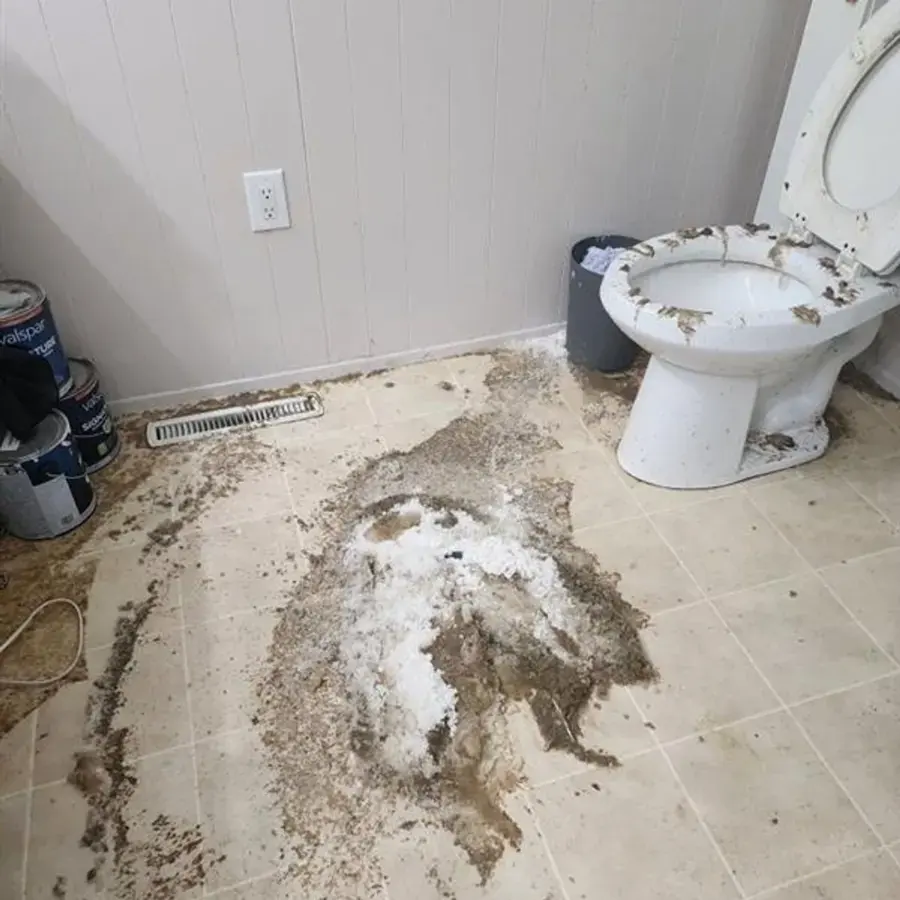
Many Marvin residents have a septic tank and a well, while Union County provides water and sewer service where a connection is available. That split matters when sewage comes up a drain, because the first call depends on which system the house uses. This post explains how to find out, what to do right away and how a Category 3 cleanup runs.
Key takeaways
- Marvin homes are not all on one system: many use a septic tank and a well, and Union County provides sewer and water where a connection is available.
- Union County Water asks customers to call immediately to report a sewer backup, sewer overflow or other wastewater emergency.
- The utility does not maintain service pipes on private property, such as the pipe between the meter and the home.
- Sewage is Category 3 whichever system it came from, so carpet, pad, insulation and low drywall it touched come out.
- Stop using water, keep people and pets away, photograph the area and leave cleanup to a crew in protective gear.
Two systems, two kinds of backup
In the Marvin area, Union County provides water and sewer where a connection is available. Many homes instead pair a septic tank with a well, so both systems are common and guessing is a poor plan.
A house on septic
Wastewater leaves the house through a pipe to a tank and a drain field in the yard. A backup can start with a blocked house drain or a tank that is full or failing.
A house on county sewer
Wastewater leaves through a pipe to the public system. A backup can start in the house pipe, in the pipe on the property or in the public main.
How to tell which system a house uses
Many homeowners learn the answer only when something goes wrong. A few checks settle it before the next emergency, and a plumber can settle it fast when the paperwork is unclear.
- Paperwork: closing papers and inspection reports often name the sewer or septic system.
- A well: many Marvin homes pair a well with a septic tank, so a well is a clue, not proof.
- A plumber: a plumber can trace where the main drain leaves the house and confirm the system.
- The county: asking Union County whether an address has a sewer connection is a direct way to find out.
Water spreading right now?
Shut off the main if it is safe. The restoration team extracts, dries to the IICRC S500 goal and documents every step, 24/7.
Early signs of a backup
Backups often announce themselves before the water comes up. These signs point to a problem in the system, not a single clogged fixture.
- Several fixtures draining slowly or gurgling at the same time
- A toilet that bubbles when the washer drains
- A sewage smell around the lowest drain in the house
- On a septic property, soggy ground or a sewage smell in the yard near the tank
What to do at the first sign of a backup
The first steps are the same on either system, and they keep the loss small until a sewage backup cleanup in Marvin can begin.
First steps
- Stop using water: no flushing, laundry, dishwasher or showers.
- Keep children and pets out of the room and away from anything the water touched.
- On county sewer, call Union County Water right away, since the utility asks customers to report a backup or overflow immediately.
- On septic, ask a septic professional or plumber to look at the tank and the house drain.
- Photograph the drain, the water and every wet item before anything moves.
- Skip the household vacuum and bleach: contaminated water needs protective gear and containment.
What to tell the utility, the plumber or the crew
- Which fixtures are affected and which still drain normally
- When it started and whether the washer or dishwasher was running
- Whether water is coming up in more than one place
- Whether the house is on septic or county sewer, if that is known
Why sewage is Category 3
Sewage carries bacteria and viruses, and porous materials hold on to whatever they absorb. They cannot be cleaned reliably, so they are removed instead of dried.
Time works against porous materials. The longer sewage sits, the deeper it wicks into carpet, pad and drywall, and the more has to come out.
- Removed: carpet, pad, insulation and drywall the water touched
- Cleaned and treated: tile, concrete, metal and sealed wood
- Cleaned, treated and dried: wall framing and the edge of the subfloor
- Photographed and listed before disposal: rugs, boxes and upholstered furniture from the backup area
How cleanup and drying run
Containment and removal
The crew seals the area off and works in protective gear. The sewage and standing water are extracted, and porous material is bagged and carried out.
- Hard surfaces are cleaned, then treated with an EPA-registered antimicrobial.
- Drywall is cut above the highest wet mark.
- HEPA air scrubbing helps keep the rest of the house clean.
- Contents that can be cleaned are treated, and porous items are listed and discarded.
- Odor control follows removal, with treatment and air scrubbing, before the area is reopened.
Drying to a reading
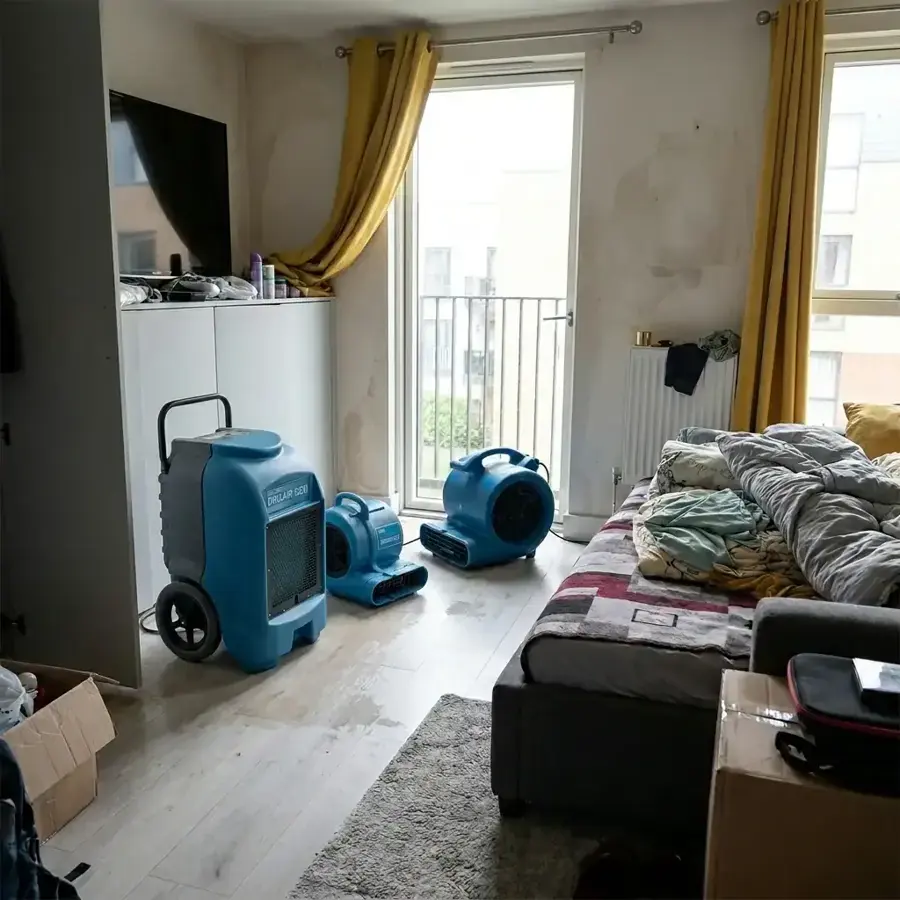
Dehumidifiers and air movers dry what remains. Structural drying in Marvin ends when moisture readings on framing and subfloor match dry materials elsewhere in the house.
Protecting the household meanwhile
- Keep children, pets and anyone with health concerns out of the work area.
- Wash hands and clothing after any contact, and discard used gloves.
- Ask the crew whether the heating and cooling system should stay off while the area is sealed.
Records and coverage
Many homeowner policies exclude sewer and drain backup unless an endorsement was added. The policy wording decides the claim, so it is worth reading before the first call to the insurer.
Union County Water does not maintain service pipes on private property, so a plumber's note on where the blockage sat belongs in the file. The Marvin water damage restoration pages cover the cleanup side.
- Dated photos and video of the drain, the water and each damaged item
- The date the backup was noticed and who was called
- The plumber's or septic professional's findings
- The restoration team's removal list and daily readings
- A written list of what was removed, with rough ages
Questions
Does the Village of Marvin handle sewer backups?
In the Marvin area, Union County provides sewer and water where a connection is available, and Union County Water asks customers to report a backup right away. A house on septic has no public sewer to call about.
How can a homeowner tell septic from county sewer?
Paperwork, a plumber or the county can confirm it. Many Marvin homes pair a septic tank with a well, so a well is a clue and not proof.
Can a wet vacuum clean up a small backup?
No. A wet vacuum can spread contamination through its hose and exhaust. Protective gear, containment and an antimicrobial treatment are needed.
Does homeowners insurance cover a sewage backup?
Often only with a water or sewer backup endorsement. The policy wording decides, and the insurer can explain the claim steps.
Is it safe to stay in the house during cleanup?
It depends on how far the water spread. The crew seals off the affected area, and the household can ask what to avoid until the work is done.
Is a septic backup cleaned up differently from a sewer backup?
The cleanup is the same either way because the water is Category 3. What differs is who looks at the source: Union County Water for the public system, a plumber or septic professional for a private one.