Thunderstorm winds tore the roofs off three warehouse-style commercial buildings in Rock Hill on July 23, 2017. On April 20, 2024, a severe thunderstorm cut a swath of wind damage through Rock Hill, with winds estimated at 70 to 90 mph and hail from 2 to 2.75 inches. Once a roof opens, the rain that follows can do as much harm as the wind, and this post covers how owners and tenants limit it.
Key takeaways
- Thunderstorm winds tore the roofs off three warehouse-style commercial buildings in Rock Hill on July 23, 2017.
- The April 20, 2024 storm brought winds estimated at 70 to 90 mph and hail from 2 to 2.75 inches, with collapsed gas station canopies, roof damage and blown out windows reported.
- Rain that follows a roof opening wets ceilings, insulation, walls and floors, so a temporary cover comes first.
- Phased drying lets a business keep part of its space open while the wet areas are dried.
- A record of dates, photos, stock lists and moisture readings supports the claim for the building and the contents.
What Rock Hill storms did to business buildings
July 23, 2017
Thunderstorm winds tore the roofs off three warehouse-style commercial buildings in Rock Hill. With a roof gone, the whole floor below is open to the next rain.
April 20, 2024
A severe thunderstorm cut a swath of extensive wind damage through Rock Hill, with winds estimated at 70 to 90 mph and hail from 2 to 2.75 inches. The National Weather Service lists collapsed gas station canopies, roof damage, blown out windows, facade and siding damage and widespread hail damage in the city.
Damage was most concentrated along Highway 901 and Saluda Street, south and west of the city center.
What the reports do not say
The reports describe kinds of damage and the hardest-hit corridors. They do not give a count of damaged businesses, so an owner should read them as context and not as a measure of any one building.
How rain gets in and where it goes
A torn roof covering, a lifted panel or a broken window lets rain into the ceiling space first. A roof leak water damage in Rock Hill job begins with stopping that entry.
On a low-slope commercial roof, water can travel along the deck or the insulation before it drops, so the wet spot below does not always sit under the opening.
Signs of hidden water above the ceiling include tile that discolors or sags and drips that begin after the rain has stopped.
- Ceiling tile and grid, which soak and sag
- Insulation above the ceiling, which holds water
- Walls that carry water down to the floor
- Carpet, flooring and stock on the floor
- Electrical and HVAC equipment near the opening
Water spreading right now?
Shut off the main if it is safe. The restoration team extracts, dries to the IICRC S500 goal and documents every step, 24/7.
Protecting stock, records and equipment
Inside the space
- Move stock and files away from drips, or cover them with plastic.
- Cover shelving and equipment that cannot move.
- Photograph shelves and equipment before moving them.
- Move computers and records away from the wet area, and switch off power to wet circuits from a dry panel.
- Tell the landlord or property manager in writing, and call the insurer.
- Tell staff which areas are off limits until the readings are dry.
At the opening
A temporary cover keeps more rain out until a roofer can make the permanent repair. The restoration team can tarp a roof, and the tarp is photographed for the record.
A cover is only temporary. Wind can lift it and rain can still run under an edge, so it is checked after each storm.
Drying in phases so the doors can stay open
Few businesses can close for a whole dry-out. A commercial water damage in Rock Hill plan splits the work into phases so unaffected areas stay open.
How the phases run
- Containment barriers separate wet areas from dry ones.
- Wet ceiling tile and insulation are removed first.
- Dehumidifiers and air movers run in the affected zones.
- Readings decide when each zone reopens.
- Stock and equipment that can be moved are staged in a dry zone.
Large open buildings
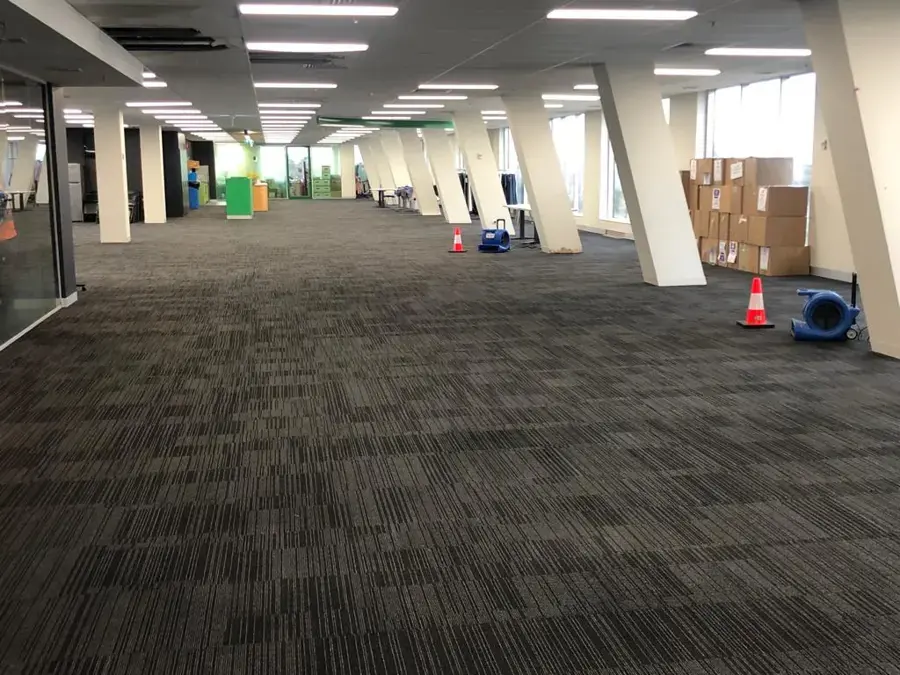
In a warehouse-style building the wet floor area can be large, so the work is divided by bay or section. Each section is dried and read on its own, and a dry bay can go back into use while another is still running equipment.
Walls, floors and the structure
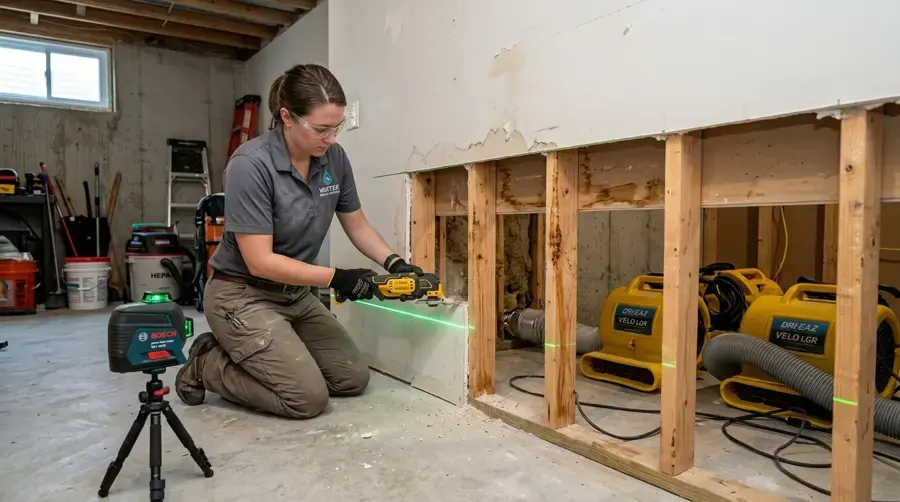
Water that ran down a wall can sit in the cavity long after the surface looks dry. Structural drying in Rock Hill follows moisture readings through walls, floors and framing.
- Drywall that stayed wet is cut out above the wet mark.
- Carpet and pad are lifted so the floor can dry.
- Framing and subfloor are dried until readings match dry areas of the building.
Permits and the repair side
The City of Rock Hill lists roofing (installing new shingles), replacing windows, and replacing siding or trim among the work that needs a building permit and inspection.
An owner or tenant planning a roof, window or siding repair can ask the City which permits apply before the work starts.
- Which permits apply to the roof, window or siding repair?
- Does an inspection follow the work?
- Does the owner or the contractor apply for the permit?
Records for the claim
Coverage for the building, the contents and lost income depends on the policies and on who holds each one, so both owner and tenant should check. The roles in a lease matter as much as the storm.
A simple log of the days and areas that were closed or limited helps, because lost-income coverage, where it exists, asks for them.
- Dated photos and video of the roof, the openings and every wet area
- The storm date and the National Weather Service reports for it
- Stock and equipment lists, with notes on what was moved or lost
- Moisture readings and removal logs from the restoration team
- Written notice to the landlord or property manager, with the date
Questions
Can a business stay open during a dry-out?
Often part of it can. Drying is planned in phases, with barriers around the wet areas, so unaffected spaces stay in use.
What should a tenant do first after storm damage?
Tell the landlord or property manager in writing, protect stock and records, and photograph the damage. The restoration team can cover the opening and start extraction.
Who holds the claim for a leased space?
It depends on the lease and the policies. The building owner usually insures the structure and the tenant insures stock and improvements, so both should check their coverage.
Does hail damage always show from the ground?
No. Hail can crack roof coverings without a visible hole, and moisture readings can find water that has already gotten in. A roofer's inspection after a hail report is a sensible step.
How is drywall handled after a roof leak?
Drywall that stayed wet is usually cut out above the wet mark so the cavity can dry, then replaced once readings are dry.
What is the difference between a roof repair and a dry-out?
The roofer closes the opening for good. The restoration team removes and dries what the rain reached, and the two jobs are scheduled so wet materials are not covered up.