On August 8, 2024, Tropical Storm Debby brought record rain to York County. A reporting station south of Rock Hill measured 7.5 inches, a station near Lake Wylie about 6 inches and the Rock Hill-York County Airport just over 4 inches. National Weather Service reports that day described creek water over roads, flooded yards and driveways, and water that appeared to be in crawl spaces.
Key takeaways
- Debby's rain on August 8, 2024 ranged from just over 4 inches at the Rock Hill-York County Airport to 7.5 inches at a station south of Rock Hill.
- Weather Service reports described creek water over King Drive and flooded yards and driveways along Skyline Road and Highway 324 southwest of Rock Hill, with water that appeared to be in crawl spaces.
- Creek water is Category 3 from the start: stay out, photograph the high-water marks and leave removal of soaked material to a crew in protective gear.
- A flooded crawl space is pumped first, then the soaked vapor barrier and insulation come out and the floor system is dried to a reading.
- Flood damage and ordinary water damage are often covered differently, so the policy wording decides the claim and a dated record helps.
What Debby brought to the Rock Hill area
The rain
Debby produced record rain for York County. Readings differed from station to station, as they do in a tropical downpour.
- A reporting station south of Rock Hill: 7.5 inches
- A station near Lake Wylie: about 6 inches
- The Rock Hill-York County Airport: just over 4 inches
- Lake Wylie: about 2 feet above its normal target level
What the reports described
National Weather Service reports from the day named specific places where water left its channel. They describe places, not whole districts, which fits how creek flooding works: low ground beside a channel takes water first.
- King Drive: creek water covering the road and overflowing a playground at College Downs Park
- Skyline Road and Highway 324, southwest of Rock Hill: flooded yards and driveways, with water appearing to be in crawl spaces
- Rambo Road, southwest of Rock Hill: water flowing over the road onto a house, likely from Stony Fork Creek
- Ogden Road, southwest of Rock Hill: about a foot of water flowing over the road from Fishing Creek
How creek water ends up under a house
Creek water that leaves its banks spreads across low yards and driveways. A crawl space has vents and seams, and water that stands against the foundation finds them.
The reports from Skyline Road and Highway 324 noted water that appeared to be in crawl spaces, which is the pattern to look for after any creek flood. Cleanup of that kind of loss is storm and flash flood cleanup in Rock Hill.
- Standing water or mud at the crawl space access door
- Insulation that has fallen or soaked through
- A vapor barrier that floats or has torn
- Water marks on the foundation or in the garage
- A musty smell in the rooms above the crawl space
Water spreading right now?
Shut off the main if it is safe. The restoration team extracts, dries to the IICRC S500 goal and documents every step, 24/7.
Why creek water is handled as Category 3
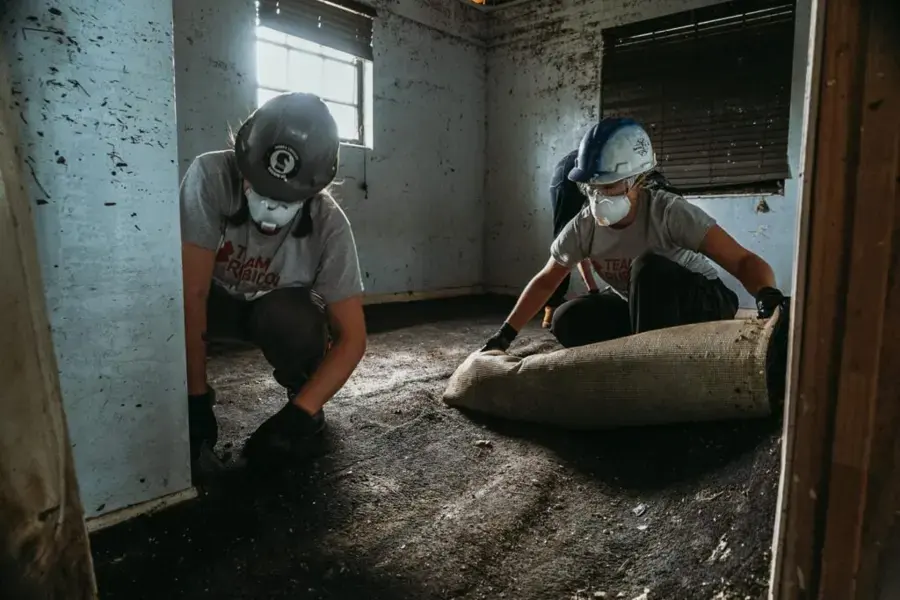
Flood water picks up soil and whatever else lies in its path, which can include fuel, animal waste and sewage. Restoration crews treat it as Category 3, the most contaminated category, from the first inspection.
What comes out
- Carpet, pad, insulation and low drywall the water touched
- Particleboard and other porous materials that soaked it up
What is cleaned and treated
- Concrete, tile, metal and sealed wood
- Framing and the edge of the subfloor, which are cleaned and then dried
First steps after the water drops
Water that has left a yard has not necessarily left the crawl space. The steps below keep people safe and keep the record clean.
- Stay out of moving water and out of a flooded crawl space until power to it is off.
- Photograph high-water marks, the access door, the insulation and every wet room.
- Note the date and the likely source: the creek, runoff from the yard or a pipe.
- Keep children and pets away from mud and standing water.
- Do not run fans or a household vacuum through wet areas.
Pumping, removal and drying
Once the area is safe, the crew pumps first and dries second. Getting the standing water out first protects the rooms above from picking up moisture.
Pump out the crawl space
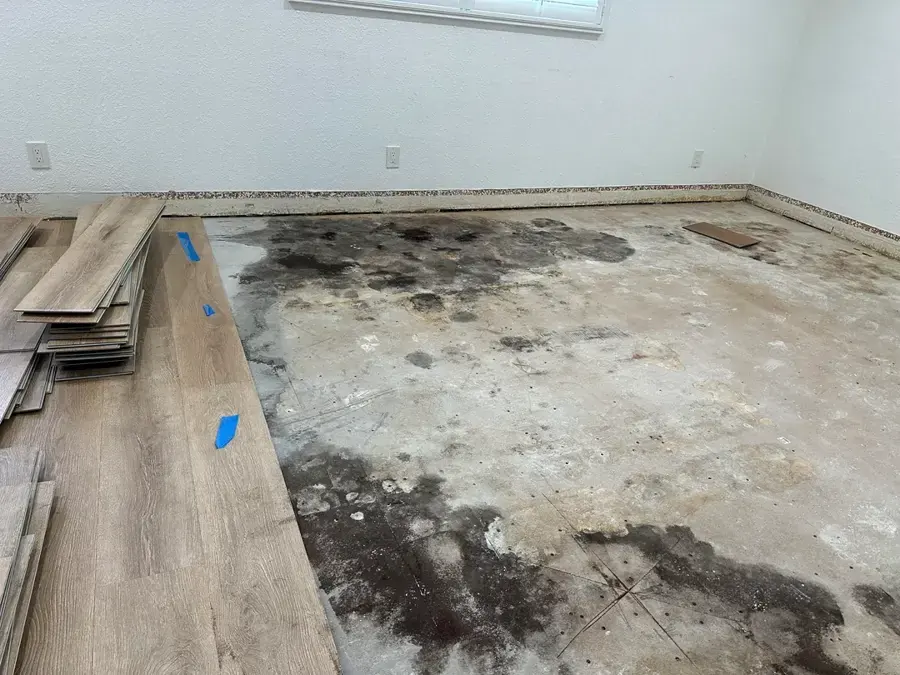
A crawl space water removal crew pumps standing water and removes soaked insulation and torn or flooded vapor barrier. Mud and debris that washed in are cleaned out so the soil and framing can dry.
Dry the floor system
A dehumidifier and air movers dry the joists and subfloor, and daily moisture readings decide when the equipment can leave. Water extraction on the floors above runs alongside, because a wet crawl space keeps feeding moisture upward until it is dry.
Mud, silt and equipment under the house
Creek water leaves silt behind. Dried silt turns to dust that carries whatever the water carried, so it is cleaned out while it is still damp.
- Silt and debris on the soil and the vapor barrier
- Ductwork, a water heater or wiring, if any run through the crawl space: a technician checks them before they are used again
- Items stored near the floor: photographed, then sorted into keep, clean or discard
- Garage and shed floors where water pooled
Records, coverage and the next storm
Records for the claim
A dated record helps whatever the policy says. Many homeowner policies treat flood differently from other water damage, so the wording decides what applies.
- Photos and video taken before anything is moved
- The date, the source of the water and the weather reports for that day
- The restoration team's removal list and daily moisture readings
- A call to the insurer to ask which steps and records it needs
Before the next tropical system
A short walk-through now makes the next cleanup faster. The Rock Hill water damage restoration pages list the services that apply.
- Know where the main water valve, the electrical panel and the crawl space access door are.
- Photograph the house and the crawl space while dry, so a later claim has a before picture.
- Keep valuables and papers off floors and out of the crawl space.
- Clear gutters and extend downspouts.
Questions
Did Debby's flood water reach Rock Hill homes?
National Weather Service reports described water flowing onto a house near Rambo Road and water that appeared to be in crawl spaces along Skyline Road and Highway 324, both southwest of Rock Hill. The reports do not give a count of affected homes.
Is creek water treated like water from a broken pipe?
No. Water from a supply pipe starts clean, but creek water is Category 3 from the start, so porous materials come out and surfaces are cleaned and treated.
How is a flooded crawl space dried?
The water is pumped out, soaked insulation and vapor barrier are removed, and a dehumidifier and air movers dry the joists and subfloor until daily readings match dry wood.
Should a homeowner enter a crawl space after a flood?
Only after power to it is off and no water touches wiring. If in doubt, stay out and let an electrician and the restoration team make it safe.
Can flood mud be left to dry and swept up?
Dried flood mud turns to dust that carries whatever the water carried. It is cleaned out while still damp and with protective gear.
Does homeowners insurance cover flood water?
Many policies treat flood differently from other water damage, so the policy wording decides. The insurer can explain what applies and which records it needs.