Water Extraction in Rock Hill, SC
Truck-mounted and portable extractors remove standing water from Rock Hill homes after creek rise, heavy rain or a supply failure, then moisture meters show where the drying must continue.
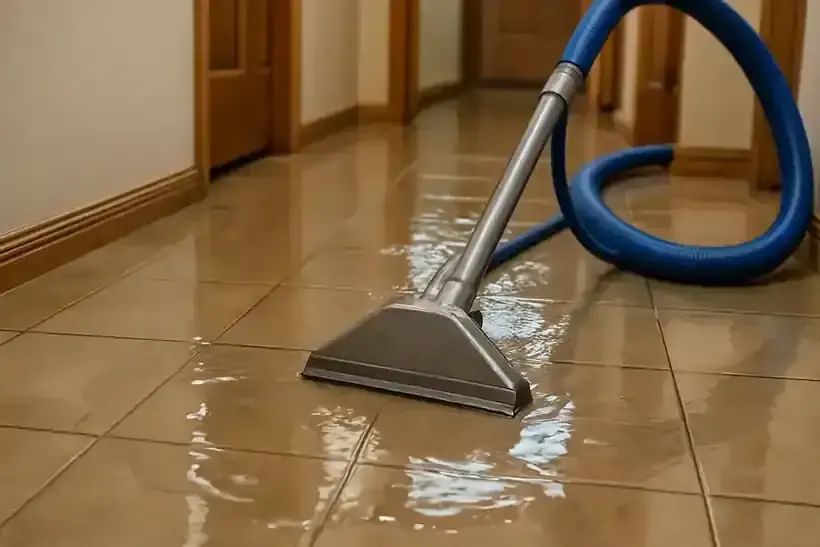
First steps for water extraction and removal in Rock Hill
Shut off the water or power to the wet area if that can be done safely.
Lift small items, rugs and furniture legs off wet floors, and photograph the damage before anything moves.
Call for extraction so the water comes out before it reaches pad, baseboards and subfloor, and keep foot traffic off soaked carpet.
How water extraction and removal is handled in Rock Hill
Water extraction is the first physical step on most wet jobs in Rock Hill, and speed matters because water that sits keeps moving into pad, baseboards and subfloor. The crew removes the bulk of it mechanically so drying equipment can work on what remains, and the same visit sets up the moisture map that steers every later decision.
What does water extraction and removal cost in Rock Hill, SC?
Water extraction in Rock Hill runs $1,000 to $2,000 for one room with a clean source, $2,000 to $4,500 for several rooms or a wet subfloor, and $4,500 and up for gray or black water.
One room, clean source
- Extractor pass over carpet and pad
- Air movers set by meter readings
- Readings logged each visit
Several rooms or wet subfloor
- Extraction in two or more rooms
- Pad lifted, subfloor dried
- Dehumidifier sized to the load
Gray or black water
- Porous materials removed and bagged
- EPA-registered antimicrobial applied
- Containment where spread is likely
Ranges are typical, not a quote: the water category, square footage, material class and how fast drying started move the number most. Run the water damage cost calculator for a closer range.
The water extraction and removal process in Rock Hill
Stop and survey
The crew confirms the source is off, checks for hazards and walks the floors with a meter to see how far the water traveled.
Pull the water
Truck-mounted units and portable extractors remove standing water, then weighted tools press out what carpet, pad and hardwood still hold.
Remove what will not dry
Soaked pad and swollen baseboard come out, and flood cuts open walls when the meter shows water wicking up the drywall.
Hand over to drying
Air movers and dehumidifiers take over from the extractors, and daily readings show when the structure is ready for repairs.
Where standing water comes from in Rock Hill
Standing water here follows heavy rain and creek rise. On August 8, 2024, National Weather Service reports described about a foot of water over Ogden Road from Fishing Creek and flooded yards along Skyline Road and Highway 324, all southwest of Rock Hill. On August 5, 2025, Big Dutchman Creek overflowed into yards in Gallant Meadows.
- Creek overflow and storm runoff that reaches garages, ground floors and the rooms behind them
- Supply pipe, water heater and appliance failures that flood one room or several at once
- Roof and ceiling leaks that drop water onto floors below and soak the insulation above
Get the water out
Describe the rooms and the water source, and the crew will plan extraction and drying for the property.
How the water is pulled out
Truck-mounted units reach the long hose runs, while portable extractors handle upstairs rooms, tight closets and finished floors.
Weighted tools press water out of carpet and pad, and tile, vinyl and sealed wood are worked with wands that lift water from joints and edges. Hardwood gets a closer look, since boards can cup if moisture stays trapped beneath them.
Clean water can turn worse as it sits, so the crew considers the source, the age of the water and the materials it touched before choosing what to remove and what to dry.
What comes out and what stays
The meter decides, not the stain. Pad under soaked carpet usually comes out, while the carpet itself can often be dried in place after a clean-water loss. Gray or black water changes that, and porous materials are removed and bagged.
- Soaked pad and swollen baseboard are removed and discarded so they cannot hold water against the wall
- Wet drywall is cut at the height the meter shows, not higher, to keep repairs small
- Salvageable contents are lifted and blocked off the floor, and the rest are moved to a dry room
After the extractors leave
Extraction removes the liquid, but the structure stays wet. Structural drying follows with air movers and dehumidifiers, and larger losses may involve storm and flood cleanup when creek water or mud is part of the loss.
Readings are logged each visit, so the homeowner and the adjuster can see how the water left the structure.
Water extraction and removal across Rock Hill and nearby communities
Extraction crews serve Rock Hill in ZIP codes 29730 and 29732, including Old Town, Downtown Rock Hill, Oakdale, Ebenezer, Newport, Boyd Hill, Riverwalk and Gallant Meadows, day or night.
The same service nearby: water extraction and removal in Lancaster, Marvin, Waxhaw.
Water damage restoration in Rock Hill › Every town covered ›Water Extraction and Removal questions in Rock Hill
How fast does extraction need to start?
As early as possible. Water spreads into pad, baseboards and subfloor while it sits, and every wet hour adds drywall and flooring to the scope.
Can carpet be saved after extraction?
Often yes after a clean-water loss, because carpet can be dried in place once the pad is removed. Gray or black water usually means carpet and pad are discarded.
Does extraction work for creek floodwater?
Yes, but floodwater is Category 3, so extraction is followed by removal of porous materials and cleaning. See storm and flood cleanup for that scope.
Should the City be called before the crew?
For a major water, sewer or electric problem, the City of Rock Hill asks customers to call Rock Hill Utilities before a plumber or electrician. Extraction can start while that is sorted out.
How is dryness confirmed after extraction?
Pin and pinless meters read drywall, subfloor and framing, and the numbers are compared with a dry reference taken in an unaffected room.
Does extraction cost the same in every home?
No. Cost follows the water category, how many rooms are wet and what lies under the floor, with ranges from $1,000 to $2,000 for one clean room to $4,500 and up for gray or black water.