Water Extraction and Removal in Marvin, NC
Extraction removes the standing water first, then a moisture map shows what soaked into pad, subfloor and walls in Marvin homes after flash floods, leaks and failed fixtures.
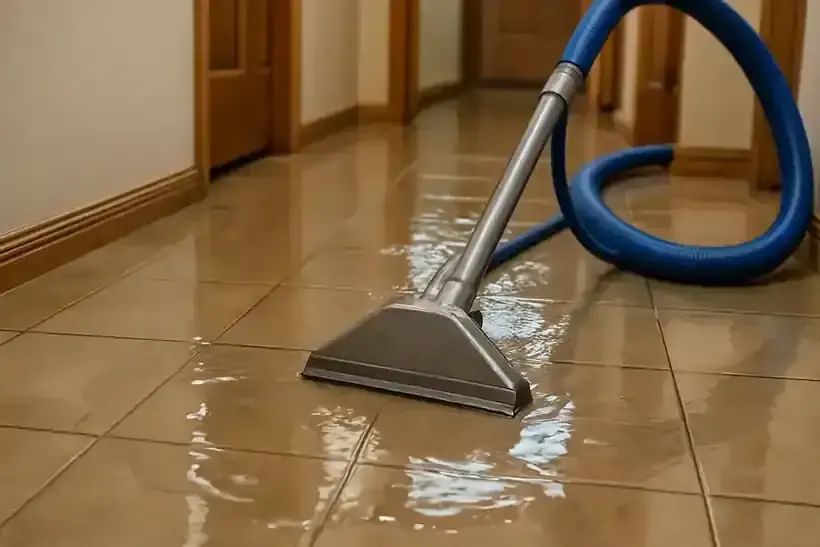
First steps for water extraction and removal in Marvin
Shut off the water source if there is one, cut power to the wet area and lift small items off the floor.
Photograph the standing water, the flooring and the walls before extraction begins, and note when the loss started.
Call the crew so extraction and moisture mapping start while carpet, pad and drywall can still be saved.
How water extraction and removal is handled in Marvin
Extraction is the step that decides how much of a Marvin house stays dry enough to save. Standing water soaks carpet pad and wicks into drywall quickly, so removing it with the right extractor before drying starts keeps the repair small.
What does water extraction and removal cost in Marvin, NC?
Extraction alone usually runs $1,000 to $2,000 for one room of clean water and climbs to $4,500 and up when the water is gray or black, because removal of porous materials and containment are added.
Single room, clean source
- Carpet and pad extracted
- Drying with air movers
- Daily meter readings
Multiple rooms or soaked subfloor
- Water pulled from two or more rooms
- Pad lifted and subfloor dried
- Dehumidifier added to the drying plan
Contaminated water loss
- Porous materials removed
- Antimicrobial treatment applied
- Containment where the area needs it
Ranges are typical, not a quote: the water category, square footage, material class and how fast drying started move the number most. Run the water damage cost calculator for a closer range.
The water extraction and removal process in Marvin
Stop and stage
The crew finds the source, confirms power is safe, protects furniture and stages the extractor at the nearest entry.
Extract
Carpet, pad and hard floors are worked until the extractor stops pulling water, then pad is lifted or left based on the category.
Map the moisture
Meters and the thermal camera show what is still wet below the surface and in the walls, and the readings are written down.
Hand off to drying
Air movers and dehumidifiers go in where the map points, and the daily logs start the record the adjuster will ask for.
Where standing water comes from in Marvin
Rain is the usual source after a storm. Joe Kerr Road, Marvin School Road, Waxhaw-Marvin Road near Crane Road, Marvin Road near the Mecklenburg County border and New Town Road between its roundabouts are on the Village's list of roads that often flash flood, and a flash flood was recorded at Marvin on November 12, 2020.
- Runoff that finds its way into a garage or a ground-floor room during a flash flood or a long soaking rain.
- A split supply pipe, a failed water heater or a dishwasher hose that runs while the house is empty.
- A roof or ceiling leak that drops water onto flooring below and carries it into the subfloor.
Get the water out
One call about the source and the wet rooms lets the crew bring the right extractor and meters.
How the crew pulls the water out
Large open floors get the truck-mounted extractor, which has the suction to pull water from carpet and pad in fewer passes, while portable units reach stairs, closets and small rooms the truck hose cannot.
Hardwood and tile get squeegees, mats and low-profile tools instead of heavy extraction, and carpet pad is either lifted or kept for drying depending on the water category and how long it stayed wet.
What the meters check afterward
Once the standing water is gone, moisture meters and a thermal camera show what soaked in below the surface, because a floor that looks dry can still hold water in the subfloor, the baseboards and the bottom of the walls. That reading tells the crew where to place air movers and how many dehumidifiers the structure needs.
- Subfloor and baseboard readings in every room the water reached
- Wall cavities checked with the thermal camera before any drywall is cut
- A dry reference reading from an unaffected room as the drying target
When to call and what to expect
Call as soon as water is on the floor, at any hour. Waiting lets drywall and pad wick moisture higher, so the earlier extraction starts, the less material has to be removed. The crew extracts, maps the moisture and then moves into structural drying, keeping photos, readings and a scope that support the insurance claim.
Water extraction and removal across Marvin and nearby communities
Extraction crews work ZIP 28173 around Marvin, from the Marvin Heritage District and Marvin Efird Park out to Firethorne, Amber Meadows, Tullamore, Belle Grove and Canterfield Creek, and the streets between them.
The same service nearby: water extraction and removal in Lancaster, Weddington, Waxhaw.
Water damage restoration in Marvin › Every town covered ›Water Extraction and Removal questions in Marvin
How soon should standing water be removed?
Right away. Carpet pad and drywall start absorbing within the first stretch of the loss, and the longer they sit wet, the more of them has to be torn out instead of dried.
Can carpet be saved after extraction?
Often yes when the source was clean water and the pad is dried quickly. Gray or black water changes that: porous materials such as pad usually go, and the carpet is judged against the category.
Does extraction work on hardwood?
Hardwood is extracted with specialty tools and then dried with mats and air movement, and the meters decide whether boards can stay. Cupping can show up days later, so readings continue after the visible water is gone.
Is water from a creek rise treated differently?
Yes. Water that came over land or out of a creek can carry sewage and soil, so it is handled as Category 3: porous materials come out, the area is cleaned and drying begins after that.
How is extraction priced?
The price follows the rooms involved, the water category and the flooring, and ranges begin near $1,000 for one clean room. The drying time estimator gives a rough sense of the equipment days that follow.
What records come with extraction?
Dated photos, the moisture readings from the first visit and a written note of what was removed, which the insurance adjuster can use alongside the daily drying logs.