Water Extraction and Removal in Weddington, NC
Standing water from a creek spill, a failed pipe or a storm comes out with truck-mounted and portable extractors, and meters show what must be pulled and what can dry in place.
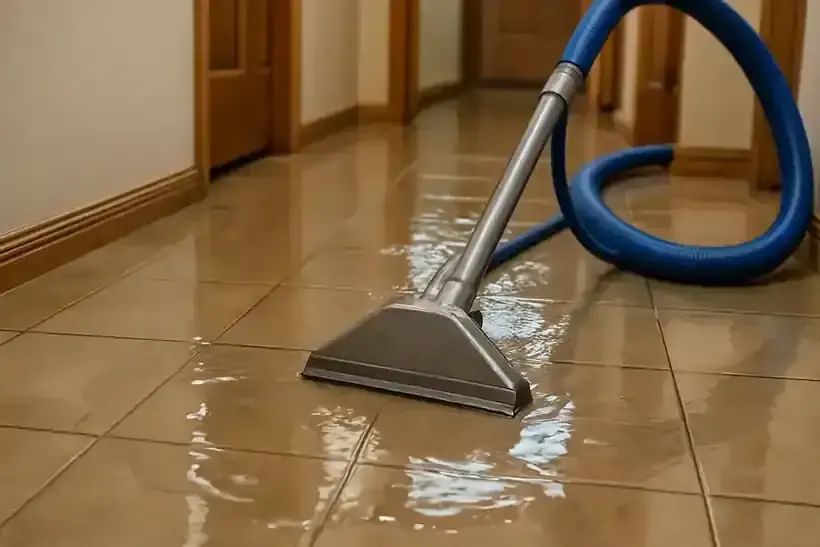
First steps for water extraction and removal in Weddington
Limit foot traffic through the water, switch off power to wet rooms and close the supply valve if a pipe is the source.
Note the depth and the source, take dated photos, and move rugs, shoes, paper and electronics onto dry surfaces.
Call the crew so extraction can start before pad, baseboards and subfloor soak up more.
How water extraction and removal is handled in Weddington
Water that is left standing keeps soaking into pad, baseboards and subfloor, so extraction is the first real step in any Weddington water loss. Crews pull the water out, document what it touched and hand the wet structure to the drying plan. The method depends on the water category.
What does water extraction and removal cost in Weddington, NC?
Water extraction in Weddington typically runs $1,000 to $2,000 for one room of clean water, $2,000 to $4,500 when several rooms or the subfloor are wet, and $4,500 and up for gray or black water.
Clean water, one room
- Carpet and pad extraction
- A few days of drying
- Daily moisture readings
Several rooms or wet subfloor
- Extraction in each wet room
- Pad removed, subfloor dried
- Crawl space dehumidifier added
Gray or black water
- Porous materials removed and bagged
- EPA-registered antimicrobial applied
- Containment set up where needed
Ranges are typical, not a quote: the water category, square footage, material class and how fast drying started move the number most. Run the water damage cost calculator for a closer range.
The water extraction and removal process in Weddington
Source and category check
The crew confirms where the water came from, shuts it off if needed and decides if it is clean, gray or black.
Pump and extract
Truck-mounted or portable extractors remove standing water, then wet vacuums clear edges, thresholds and tight corners.
Remove what cannot dry
Saturated pad, soaked baseboards and contaminated materials are bagged out so they stop holding moisture against the subfloor.
Hand off to drying
Readings taken after extraction set the drying plan, and the same meters confirm the structure is dry before equipment leaves.
How standing water is removed from a home
A truck-mounted unit pulls the most water when the vehicle can reach the house, while portable extractors work room by room on carpet, pad and tile. Wet vacuums finish edges and corners.
- Carpet is extracted in place first, then lifted if the pad underneath tests wet or contaminated.
- Hardwood and laminate get surface extraction and a moisture check before anyone decides to pull boards.
- Tile and vinyl are cleared of water quickly, with readings taken in the subfloor beneath.
Talk through the extraction
Tell dispatch where the water is, how deep it is and what it came from, and the crew plans the equipment.
Why rain and creek rise matter here
A flash flood report from July 15, 2016 had West Fork Twelve Mile Creek spilling onto parts of Forest Lawn Drive, and Hurricane Florence's rain on September 16, 2018 put almost 100 Union County roads underwater.
Floodwater that comes in from outside carries silt and is generally treated as Category 3, so porous materials come out sooner and extraction is followed by cleaning before any drying equipment is set.
Standing water settles in the lowest rooms first, so crews check garages, finished lower levels and any crawl space for pooled water.
What happens after the water is out
Extraction removes the standing water, not the moisture held inside materials. Meters and thermal imaging show where wet pad, baseboards and subfloor are still holding water, and the drying plan is built from those readings.
- Pad and baseboards come out whenever readings stay high after extraction.
- Subfloor and wall bases get targeted drying until they match the dry reference.
- Dehumidifiers and air movers are sized to the wet area and logged at each visit.
Signs the water needs more than a wet vacuum
Call when water covers more than a small patch, when carpet squishes underfoot, when the water came from a drain or a flood, or when a ceiling or wall is wet above it. A household vacuum cannot reach the pad, the subfloor or the wall base where moisture settles. Drying after extraction is covered under structural drying, and creek water falls under storm and flash flood cleanup.
Water extraction and removal across Weddington and nearby communities
Extraction crews work ZIP 28104 and the wider Weddington area, including Atherton, The Falls at Weddington, Harlow's Crossing, Weddington Acres, Canisteo and Fox Run, as well as the Town Center.
The same service nearby: water extraction and removal in Lancaster, Wesley Chapel, Marvin.
Water damage restoration in Weddington › Every town covered ›Water Extraction and Removal questions in Weddington
Is extraction enough, or does the home still need drying?
Extraction removes standing water, but pad, baseboards and subfloor hold moisture afterward. Meter readings decide how much structural drying follows, and the job closes only when readings reach the dry reference.
Can wet carpet in Weddington be saved?
Often, when the water was clean and extraction started promptly. Gray or black water ruins the pad and usually the carpet, so those materials are removed instead of dried.
Does creek water count as clean water?
No. Water that comes in from outside, such as a creek spill, carries silt and contaminants, so it is treated as Category 3 and cleaned with an antimicrobial.
Will the crew move furniture and belongings?
Crews lift furniture off wet carpet, block it up on protective pads and move small items out of the work area. Contents that took on water are noted in the photos for the claim.
What if the water is under the house?
Where a home has a crawl space, the water is pumped out before drying equipment goes in, and meters check the barrier, joists and subfloor above.
Does homeowners insurance cover extraction costs?
Policies vary, and the source of the water is a big factor, so ask the insurer early. The crew keeps dated photos and meter logs, plus an itemized scope, ready for the adjuster.