Commercial Water Damage in Wesley Chapel, NC
A wet suite, shop, office or church hall needs drying that works around the business, so zones are phased, equipment is checked after hours and daily reports go to the owner, manager and carrier.
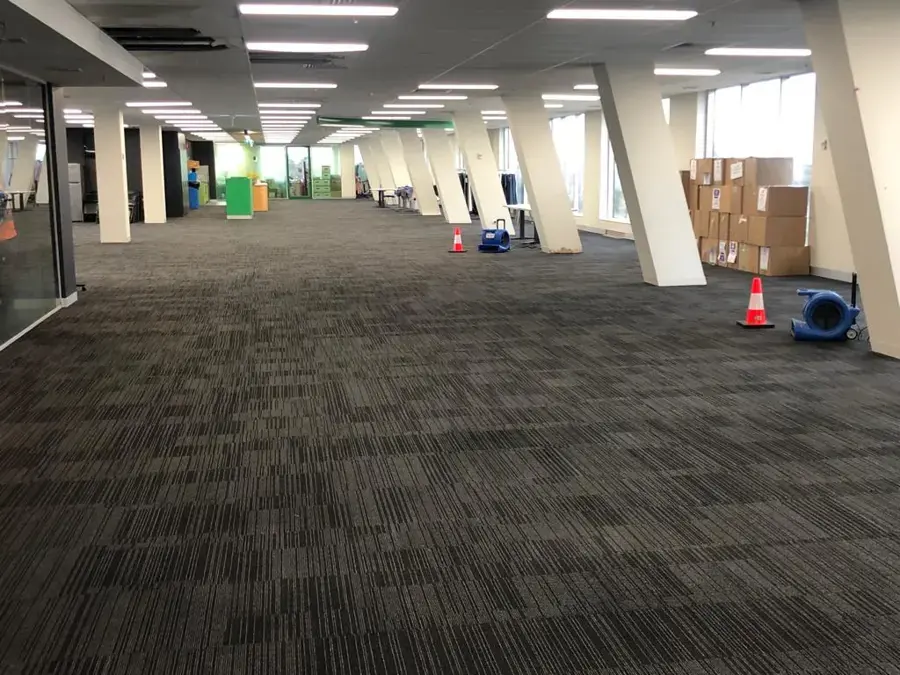
First steps for commercial water damage in Wesley Chapel
Shut off the water source if it is safe, and move stock, files and electronics off wet floors.
Photograph the damage and note which tenants, rooms and ceilings are affected, then tell the property owner or manager.
Call the crew to plan containment and drying, and keep people out of wet or sagging areas.
Water loss at a Wesley Chapel business? Call the commercial crew.
(888) 532-8921 Call about a Wesley Chapel business lossHow commercial water damage is handled in Wesley Chapel
Commercial water losses in the Wesley Chapel area are small-scale: a suite in the shopping area where Weddington Road meets Waxhaw-Indian Trail Road, a school or municipal building, or a church hall. The work matches the home standard, but the schedule bends around customers and staff.
What does commercial water damage cost in Wesley Chapel, NC?
A single suite or small shop costs $3,000 to $8,000, several suites or a church hall cost $8,000 to $25,000, and a large loss or Category 3 water costs $25,000 and up, scoped after a survey.
Single suite or small shop
- Extraction with containment set up
- Drying with daily reports
- Ceiling tile and carpet inspected
Several suites or a church hall
- Phased drying zones throughout
- Carpet and drywall removal where wet
- Equipment checks after closing time
Large loss or Category 3 water
- Desiccant units and extra LGR capacity
- Sewage or flood protocols followed
- Itemized scope for each carrier
Ranges are typical, not a quote: the water category, square footage, material class and how fast drying started move the number most. Run the water damage cost calculator for a closer range.
The commercial water damage process in Wesley Chapel
Assess the building
The crew meets the manager, finds the source, checks power and sorts spaces into wet, at risk and unaffected.
Contain and extract
Barriers close off wet areas, water is extracted, and loose carpet, ceiling tile and wet insulation are removed.
Dry in phases
Zones are dried one after another, with air movers and dehumidifiers placed to keep the rest of the business open.
Report each day
A short daily report gives readings, equipment status and next steps to the owner, manager and carrier.
Phased drying around the business
Large rooms are split into drying zones so one area can reopen while another dries. Containment separates wet space from open space, and equipment is placed to keep cords and noise away from customers and staff.
- Ceiling tiles are checked and replaced where stained or sagging.
- Carpet tile and adhesive are tested, since tile lifts and dries faster than broadloom.
- Walls are metered at the base, where wicking starts.
- Wet drywall behind wall coverings is opened and dried before it can stain.
Request a commercial walkthrough
Dispatch asks about the building type, the affected suites and any after-hours access needs before a plan is set.
After hours and weekends
Equipment checks can be scheduled after closing or before opening, so readings are logged without disturbing the business. The crew leaves a plain summary so a manager knows what is running and what is next.
For a flooded or sewage-affected space, the sewage backup cleanup rules apply to the whole suite.
Tenants, owners and carriers
A leak in a multi-tenant strip involves the owner, the tenant and often two insurers, so the file separates what each party controls. Dated photos, readings and a written scope let each carrier see which part of the loss falls to it.
Large losses and equipment
A bigger loss, such as a church hall or a multi-suite building, can need desiccant units and extra LGR capacity, and the structural drying page explains how classes and readings set the equipment.
Any carpet, drywall or ceiling section removed in a public area is barricaded and logged so access stays safe.
Commercial water damage across Wesley Chapel and nearby communities
Commercial work covers the shopping area on Weddington Road at Waxhaw-Indian Trail Road, schools, church halls and small offices across the Wesley Chapel area, in ZIP 28173 and its three neighbors.
The same service nearby: commercial water damage in Lancaster, Weddington, Waxhaw.
Water damage restoration in Wesley Chapel › Every town covered ›Commercial Water Damage questions in Wesley Chapel
Can a business stay open during drying?
Often yes. Containment and phased zones let unaffected areas keep operating, with equipment and cords placed away from customers and staff.
Who gets the daily reports?
The owner, the property manager and the carrier can all receive them, so tenants and landlords see the same readings.
What happens to ceiling tiles and carpet tile?
Stained or sagging tiles are replaced, and carpet tile is lifted, tested and often dried or swapped square by square, which keeps the repair small.
Is a church hall or school treated differently?
The method is the same, but access matters more. Rooms are phased around services, classes or events, and each space is documented.
What does commercial drying cost?
A single suite or small shop costs $3,000 to $8,000, and larger losses cost more. The scope follows the moisture survey, so the figure tracks the actual wet area.
Does the crew handle sewage in a business?
Yes. A sewage or flood loss is Category 3, so the suite is contained, porous materials come out and surfaces are treated before drying.