Crawl Space Water Removal in Waxhaw, NC
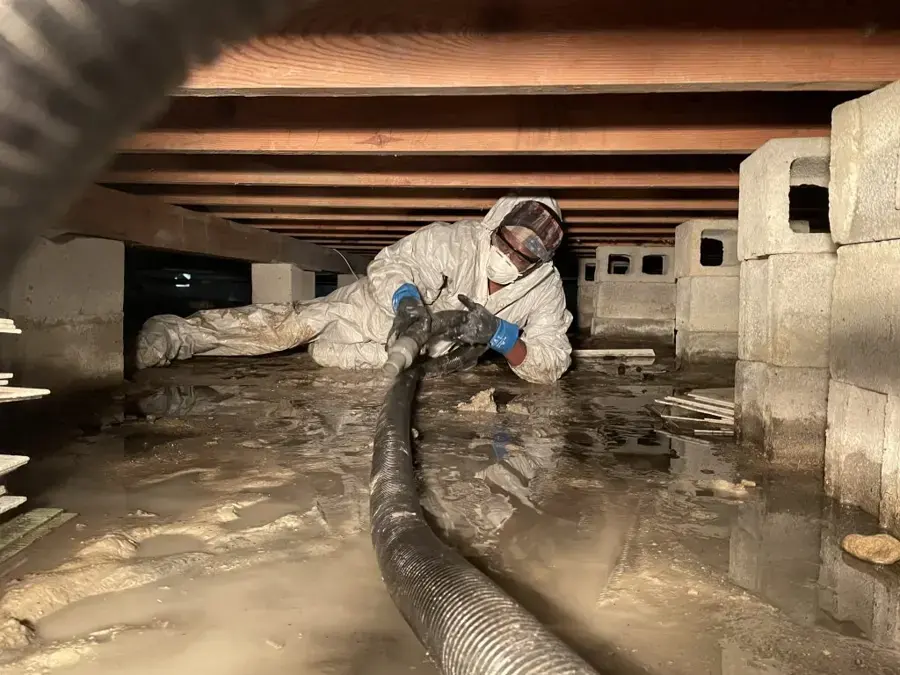
Where a home has a crawl space, water under the floor stays hidden and keeps wetting the framing. Crews pump it out, remove wet materials and dry the joists with a dehumidifier.
First steps for crawl space water removal in Waxhaw
Shut off the water if a pipe is the source, and keep everyone out of a wet crawl space, where standing water can sit near wiring.
Take photos from the access hatch of the water level, the insulation and any visible pipe leak, without stepping inside.
Call the Waxhaw crew for pump-out, a moisture check of the joists and a dehumidifier plan.
Water under a Waxhaw floor? Call for pump-out and a joist moisture check.
(888) 532-8921 Call for Waxhaw crawl space waterHow crawl space water removal is handled in Waxhaw
A crawl space is out of sight, so water in it can sit for weeks. The wood above pays for it: joists and subfloor take on moisture, insulation sags and the air under the house turns damp. Removal is about getting the water out and the structure dry before the floor above is affected.
What does crawl space water removal cost in Waxhaw, NC?
Shallow clean water runs $1,500 to $2,500, standing water with a wet barrier runs $2,500 to $5,000, and sewage or flood water in a crawl space starts at $5,000 and up.
Shallow clean water
- Pump-out and wet vacuum
- Dehumidifier for the space
- Joist readings every visit
Standing water, wet barrier
- Soaked barrier and insulation out
- Framing and subfloor dried
- New barrier once dry
Sewage or flood water
- Category 3 protocols followed
- Antimicrobial treatment
- Longer drying, full records
Ranges are typical, not a quote: the water category, square footage, material class and how fast drying started move the number most. Run the water damage cost calculator for a closer range.
The crawl space water removal process in Waxhaw
Find the source
The crew locates the leak or entry point, confirms the water category and checks the space for wiring and ductwork.
Pump and vacuum
Submersible pumps and wet vacuums take the standing water out, then wet debris is bagged.
Pull what is soaked
Wet insulation and a torn or soaked barrier are removed so joists and subfloor can release moisture.
Dry and document
A dehumidifier and air movers run with daily joist readings until the wood reaches the dry reference.
Where crawl space water comes from
Wet crawl spaces usually trace back to a supply pipe, a drain or condensate leak above, or runoff and groundwater below. Union County Water also names crawl spaces, attics and garages as unheated places where exposed pipes need wraps before winter.
- Supply pipe: a one-eighth-inch crack from a freeze can release more than 250 gallons a day, Union County Water says.
- Drain or condensate leak: a slow drip can wet one patch of framing for months.
- Runoff or groundwater: heavy rain can push water in through vents, gaps and low spots.
Get the crawl space dry
The crew pumps the space out, removes soaked materials and runs a dehumidifier until the joists read dry.
What the soil map says near Waxhaw
USDA soil survey data for the Waxhaw area lists well-drained Tarrus and Cecil soils with clay subsoils as common. It also maps Chewacla, a somewhat poorly drained soil that floods frequently, in creek bottoms near Waxhaw. A crawl space reacts to the ground and the weather around it, so the work starts with finding where the water is entering.
Removing the water and the wet materials
Pumps and wet vacuums take the standing water out, then the crew works from the entry point with a moisture meter. Insulation that has soaked, torn vapor barrier and wet debris come out so the framing can dry.
- Joists and subfloor: readings taken at set spots and logged each visit.
- Dehumidifier and air movers: set for the size of the space and checked daily.
- Barrier and insulation: replaced only after the wood reads dry.
Sewage or flood water in a crawl space
If the water carries sewage or flood runoff, Category 3 protocols apply: protective gear, containment, removal of porous materials and an antimicrobial treatment. Sewage backup cleanup and storm and flash flood cleanup describe those jobs in full.
Crawl space water removal across Waxhaw and nearby communities
Crawl space crews serve ZIP 28173 around Waxhaw, including Downtown Waxhaw, the Waxhaw Historic District, Hunter Oaks, Cureton, Hollister, Wesley Oaks, Aero Plantation and other Waxhaw-area subdivisions.
The same service nearby: crawl space water removal in Lancaster, Wesley Chapel, Weddington.
Water damage restoration in Waxhaw › Every town covered ›Crawl Space Water Removal questions in Waxhaw
How does water get into a crawl space?
Common routes are leaking supply pipes, slow drain or condensate leaks, and runoff or groundwater after heavy rain. Finding which one is active comes before any pumping.
Is a damp crawl space the same as a flooded one?
Not quite. Damp air and condensation call for moisture control, while standing water calls for pumping and removal. Meter readings on the joists show which situation the crew is dealing with.
Can wet insulation stay in place?
Usually not. Soaked insulation holds water against the subfloor and loses its value, so it is removed and replaced after the framing is dry.
Does a frozen pipe leak show up under the house?
It can. Union County Water says a one-eighth-inch crack in a frozen pipe can release more than 250 gallons a day, and a crawl space can hide that water until the floor above feels soft.
Will insurance cover crawl space water?
That turns on the policy and on the cause, since a pipe failure and rising groundwater are often handled differently. The crew supplies photos, readings and an itemized scope.
When does the barrier get replaced?
Only after the joists and subfloor read dry. Laying a new vapor barrier over damp wood traps moisture, so replacement is the last step of the job.