Crawl Space Water Removal in Weddington, NC
Where a Weddington home has a crawl space, pooled water, a soaked barrier and wet joists are handled together, starting with a pump-out and ending with joist readings that reach dry.
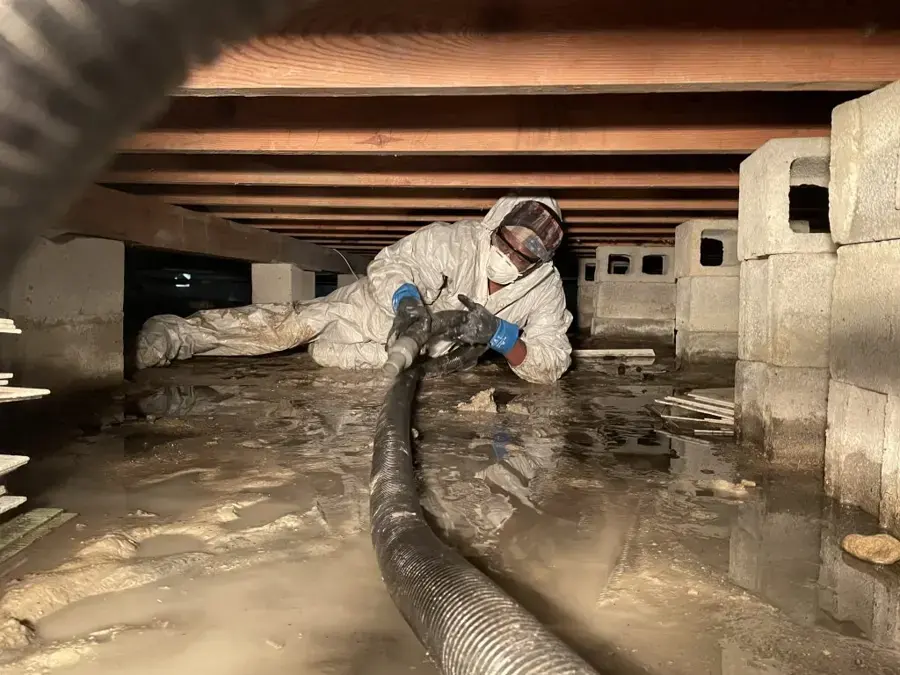
First steps for crawl space water removal in Weddington
Turn off the water supply if a pipe is leaking, and switch off power to any crawl space outlets or equipment before anyone goes in.
Do not enter standing water, since it can touch wiring and may be contaminated, and photograph what is visible from the access hatch.
Call the crew to set up a pump-out and a dehumidifier plan before the floor above absorbs more moisture.
How crawl space water removal is handled in Weddington
A crawl space holds water out of sight, and what sits there rises into the floor above as humidity and wet framing. Where a Weddington home has one, the water is pumped out, the soaked barrier and insulation are dealt with and the joists are dried to readings.
What does crawl space water removal cost in Weddington, NC?
Crawl space water removal in Weddington typically costs $1,500 to $2,500 for shallow clean water, $2,500 to $5,000 for standing water and a wet barrier, and $5,000 and up for sewage or flood water.
Shallow clean water
- Pump-out and wet vacuum
- Crawl space dehumidifier running
- Joist readings every visit
Standing water, wet barrier
- Barrier and insulation removed
- Framing and subfloor dried
- New barrier after drying
Sewage or flood water
- Category 3 protocols followed
- Antimicrobial treatment applied
- Extended drying with records
Ranges are typical, not a quote: the water category, square footage, material class and how fast drying started move the number most. Run the water damage cost calculator for a closer range.
The crawl space water removal process in Weddington
Check access and safety
The crew confirms power is off, checks the hatch and assesses water depth and category before entering.
Pump out the water
Pumps and wet vacuums clear the standing water, with attention to the low corners where it collects.
Strip what is soaked
A wet barrier and hanging insulation come out, and joists and subfloor are readied for drying.
Dry and confirm
A crawl space dehumidifier runs until joist readings match the dry reference, and a new barrier follows.
Where crawl space water comes from
Rain runoff, a leaking supply pipe, a failed drain or a water heater tank can all put water under a floor. Union County Water names crawl spaces, attics and garages as unheated places where exposed pipes need wraps before cold weather.
Soil drainage varies too. USDA data for 25 sample points around the town center shows well-drained upland soils at 20 of them and somewhat poorly drained, frequently flooded Monacan or Chewacla soil at 3, though a sample is not a survey of any one lot.
Plan the crawl space pump-out
Tell dispatch what the hatch shows, where pipes run and whether the water looks clean, and the crew prepares pumps and a dehumidifier.
What the removal sequence involves
Crews pump the standing water first, then wet-vacuum the low spots so nothing stays pooled under the floor.
- A soaked vapor barrier is cut out and bagged, since it traps water against the ground.
- Wet insulation hanging between joists is removed because it cannot dry in place.
- Joists and subfloor are dried with a crawl space dehumidifier and logged readings.
A new barrier goes back only after the framing meets its dry reference, so the repair does not seal moisture in.
When the water is not clean
A crawl space that took sewage, creek water or flood runoff is Category 3 work: the crew sets containment, removes porous material, treats surfaces and documents each step. See storm and flash flood cleanup for the flood side.
Signs of water under the floor
Musty air, a soft or cold floor, sagging insulation and damp joists all point to water below. Moisture readings in the joists confirm it before anything is removed. Water under a house usually has a trail, so crews also check the walls above for wet baseboards.
Related drying work is covered under structural drying.
Crawl space water removal across Weddington and nearby communities
Crawl space crews serve ZIP 28104 and the Weddington area, including Aero Plantation, Hadley Park, Lake Forest Preserve, Cambridge Oaks, Wellington Woods and the streets around the Town Center.
The same service nearby: crawl space water removal in Lancaster, Wesley Chapel, Marvin.
Water damage restoration in Weddington › Every town covered ›Crawl Space Water Removal questions in Weddington
How can a homeowner tell if water is under the floor?
Look from the access hatch if it is safe for standing water or dripping pipes, and note musty air or sagging insulation. A meter reading on the floor above confirms moisture.
Is crawl space water always from outside?
No. A supply pipe or a water heater tank can leak into the space from inside the house, which usually means clean water, while a failed drain changes the category.
Does the vapor barrier have to be replaced?
A barrier that sat in water is usually cut out and replaced after drying, because it traps moisture against the ground. The new one goes in only once joist readings are dry.
How long does a crawl space take to dry?
That depends on how wet the framing got and how well the space can be closed off. Joist readings are logged each visit, and the dehumidifier leaves only when they reach dry.
What should be done about exposed pipes before winter?
Union County Water advises wrapping exposed pipes in unheated spaces before freezing weather, which includes crawl spaces. A split pipe under the floor can flood the space before anyone notices.
Will the insurer ask about the crawl space?
Adjusters want proof of the water source and what was removed, so the crew photographs the standing water, barrier and framing and keeps logs and the itemized scope together.