Crawl Space Water Removal in Marvin, NC
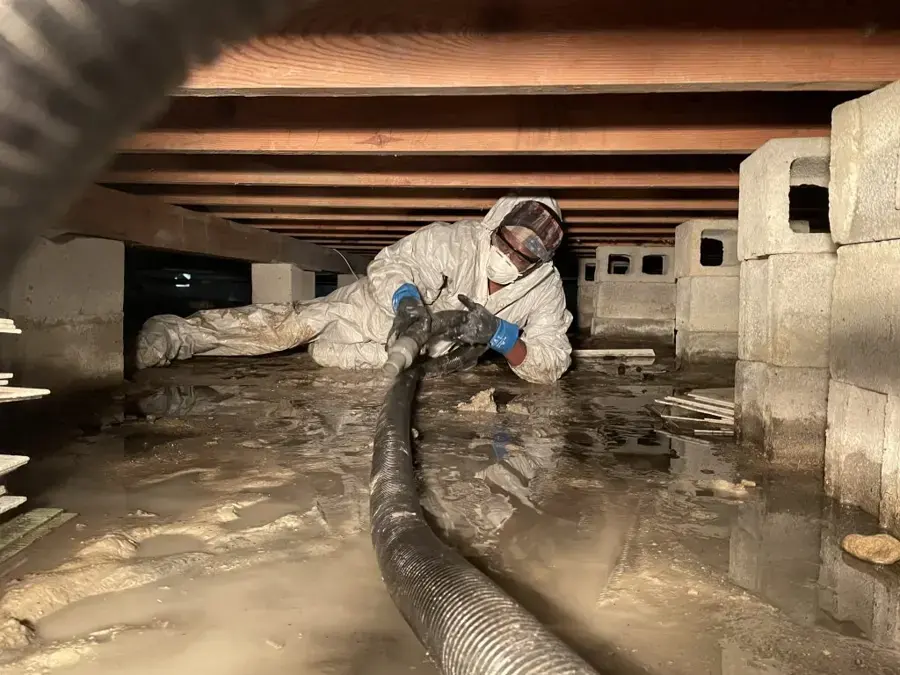
For Marvin houses that sit on a crawl space, standing water or a soaked barrier means pumping out, pulling wet insulation and drying joists and subfloor from underneath.
First steps for crawl space water removal in Marvin
Do not enter a flooded crawl space: water near wiring and tight access make it unsafe, so turn off power at the panel if water might reach outlets or equipment.
Photograph from the access opening if that can be done safely, and note when the water first appeared.
Call the crew to pump out, remove wet materials and start dehumidifying before the subfloor above stays wet.
How crawl space water removal is handled in Marvin
Water under a house stays hidden until floors feel soft or the air turns musty, and it keeps moving moisture upward into the subfloor. Marvin houses that sit over a crawl space need the water pumped out, the wet materials removed and the framing dried from below.
What does crawl space water removal cost in Marvin, NC?
Shallow clean water in a crawl space usually runs $1,500 to $2,500, standing water with a soaked barrier moves it to $2,500 to $5,000, and sewage or flood water begins at $5,000 and up.
Shallow clean water
- Pump-out with a wet vacuum
- Dehumidifier set under the floor
- Joist readings each day
Standing water, wet barrier
- Barrier and insulation cut out
- Framing and subfloor dried
- New barrier once dry
Sewage or flood water
- Category 3 containment steps
- Antimicrobial on framing
- Extended drying and records
Ranges are typical, not a quote: the water category, square footage, material class and how fast drying started move the number most. Run the water damage cost calculator for a closer range.
The crawl space water removal process in Marvin
Find the source
The crew checks pipes, drains and roof runoff to learn where the water came from before any pumping begins.
Pump and remove
Standing water is pumped out, and wet insulation and barrier are cut away and bagged for disposal.
Dry from below
A dehumidifier and air movers run under the floor while meters track the joists and the subfloor above.
Verify and restore
Barrier and insulation go back only after the readings reach the dry reference and the logs confirm it.
How water gets under a house
USDA soil data lists Cecil, Helena, Iredell and Lloyd as common Marvin-area soils, mostly well drained to moderately well drained, with no flooding rating for the soils sampled. Soil alone does not explain a wet crawl space, so the first job is finding the source.
- Heavy rain or flash flood runoff reaching the foundation
- A split supply pipe or water heater drain discharging below the floor
- A pipe or condensate drain emptying into the space instead of outside
Pump out and dry
Tell the crew what the water looks like and where it entered so the right pumps and dehumidifiers are loaded.
Removing water and wet materials
Pumps and wet vacuums clear the standing water, then wet fiberglass insulation and a soaked vapor barrier are cut out and bagged because they hold moisture against the joists. Clean water gets a different protocol than sewage or flood water, which needs full containment.
Before freezing weather, Union County Water suggests wrapping pipes that run through crawl spaces, garages and attics, which matters because a split pipe under the floor can run unseen.
Drying joists, subfloor and framing
A crawl space dehumidifier runs with air movers aimed at the joists, and meters on the subfloor above show when the wood has returned to the dry reference. A new vapor barrier goes in only after the framing is dry.
- Daily joist and subfloor readings recorded
- Dehumidifier condensate drained away from the structure
- Barrier and insulation replaced after drying is verified
Documentation and next steps
Photos of the standing water, the removed insulation and the dried framing become part of the claim file, and the crawl space water risk check can help owners spot trouble early.
Crawl space water removal across Marvin and nearby communities
Crawl space work covers ZIP 28173 in the Marvin area, including Firethorne, Amber Meadows, Providence Glen, Therrell Farms, Valhalla Farms and Oak Brook Estates, plus homes near the Marvin Heritage District.
The same service nearby: crawl space water removal in Lancaster, Weddington, Waxhaw.
Water damage restoration in Marvin › Every town covered ›Crawl Space Water Removal questions in Marvin
What makes a crawl space water job different?
Access is tight, wiring and ducts sit close, and wet materials hold moisture against the structure, so pumping, removal and framing drying all come before replacement.
Should standing water be pumped out right away?
Yes, once the source is stopped and power is safe, because water under the floor feeds humidity into the subfloor and living space. Pumping is followed by dehumidification.
Can wet insulation stay in place?
Fiberglass batts that sat in water usually hold moisture against the joists and are removed. The crew cuts and bags them, checks the subfloor above and replaces insulation after the framing is dry.
How long does a crawl space take to dry?
Several days is typical for a space with standing water, but the joist readings decide. Equipment stays until the wood reaches the dry reference, and the barrier goes down last.
Does a frozen pipe under the floor count as a crawl space job?
Often. A pipe that split during freezing weather can empty under the floor unnoticed, so the work combines pipe damage cleanup with this service. Frozen pipe water damage covers that side.
Is sewage in a crawl space handled the same way?
No. Sewage is Category 3 water, so porous materials are removed, the area is contained and treated, and drying begins afterward. Union County Water asks customers to call immediately about a sewer backup.