Structural Drying and Dehumidification in Waxhaw, NC
Water does not stop at the surface, and a wet wall or floor can stay wet long after it looks dry. Crews dry the structure to a measured reference, not to a guess.
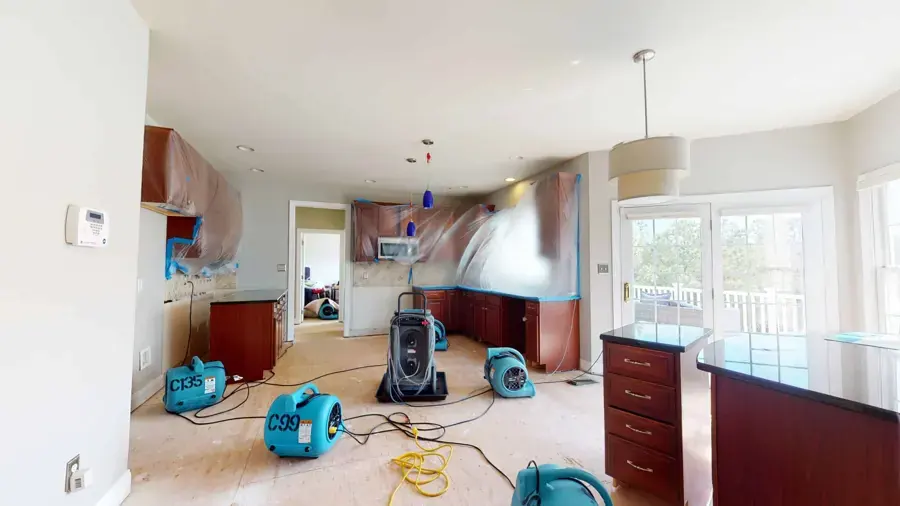
First steps for structural drying and dehumidification in Waxhaw
Keep wet rooms closed to foot traffic, and leave carpet, baseboards and cabinets in place until the crew has taken readings.
Keep the thermostat at a normal setting, and let the crew place and run all drying equipment.
Call the Waxhaw crew for a moisture map and a drying plan sized to the class of loss.
Wet walls or floors in Waxhaw? Call for a drying plan.
(888) 532-8921 Call for Waxhaw structural dryingHow structural drying and dehumidification is handled in Waxhaw
Structural drying is the part of water damage work that most people never see: air moving across wet materials, dehumidifiers pulling vapor from the room and a meter proving the result. Done right, it saves framing, flooring and drywall that would otherwise rot or grow mold.
What does structural drying and dehumidification cost in Waxhaw, NC?
Class 1 or 2 drying in one area runs $1,200 to $2,500. Class 3 across several rooms runs $2,500 to $5,000, and Class 4 or a large loss starts at $5,000 and up.
Class 1 or 2, one area
- Map and dry reference set
- LGR dehumidifier, air movers placed
- Humidity logged each visit
Class 3, several rooms
- Extra equipment and containment
- Walls and ceilings dried
- Cavity drying where needed
Class 4 or large loss
- Desiccant drying of dense layers
- Hardwood or plaster drying
- Long monitoring period
Ranges are typical, not a quote: the water category, square footage, material class and how fast drying started move the number most. Run the water damage cost calculator for a closer range.
The structural drying and dehumidification process in Waxhaw
Map and set the reference
A meter and thermal camera chart every wet surface, and a reading from dry material becomes the target.
Place the equipment
LGR dehumidifiers and air movers go in by class and layout, with containment where vapor needs to be held.
Check and adjust daily
Temperature, humidity and moisture readings are logged, and equipment is moved as the wet spots get smaller.
Confirm and remove
Equipment comes out only when every point matches the dry reference, and the logs go into the file.
Classes of water loss and equipment
Drying plans follow the class of the loss. Class 1 and 2 jobs involve limited wet material and moderate evaporation, Class 3 means water came from above and soaked walls and ceilings, and Class 4 covers dense materials such as hardwood and plaster that release water slowly.
- LGR dehumidifiers pull moisture from the air at lower humidity than standard units.
- Air movers are placed by the moisture map, not by a fixed spacing.
- Desiccant units handle dense or cold materials that standard equipment cannot.
Dry it to the reference
The crew maps the moisture, places the equipment and logs readings until every point is dry.
Waxhaw homes and what they are made of
About 81 percent of Waxhaw homes were built in 2000 or later, and the median year built is 2010. Newer houses still hold water in subfloor, framing, cabinets and insulation, and the 504 homes built before 1980 may add dense materials that need longer drying.
That mix matters because drying time is set by the materials and the wet class, not by the age of the house.
How drying is measured and logged
A pin or pinless meter takes readings in each wet material on the first visit, and a dry reference reading is taken from similar material that stayed dry. Each day, temperature, humidity and moisture content are logged, and equipment is moved or removed as spots reach the reference.
- Day one: moisture map, dry reference and equipment placement.
- Daily visits: readings, psychrometric logs and adjustments.
- Final visit: every point at the dry reference, then equipment out.
Equipment stays in place until the last reading passes, which is why a room can feel dry days before the logs say it is.
After drying: records and rebuild
The crew hands over the logs and photos for the insurance file. Rebuilding is a separate trade, and the Town of Waxhaw Building Inspections and Permitting division takes permit submissions and inspection requests through its Permit Portal. Related work is covered under water extraction and ceiling leak water damage.
Structural drying and dehumidification across Waxhaw and nearby communities
Drying crews serve ZIP 28173 in Waxhaw, from Downtown Waxhaw, the Waxhaw Historic District and Prescot Village to Millbridge, Hunter Oaks, Cureton and other Waxhaw-area neighborhoods.
The same service nearby: structural drying and dehumidification in Lancaster, Wesley Chapel, Weddington.
Water damage restoration in Waxhaw › Every town covered ›Structural Drying and Dehumidification questions in Waxhaw
What does structural drying mean?
It means drying the building itself: framing, subfloor, drywall, cabinets and hardwood, not only removing standing water. Air movers and dehumidifiers work until meter readings match a dry reference.
Why do the machines stay for days?
Materials release moisture slowly, so a surface can feel dry while the framing behind it is wet. Equipment stays until the last reading passes, and daily logs show the trend toward dry.
What is a dry reference?
It is a reading taken from similar material in the home that stayed dry. Wet materials are dried until they match it, which ties the finish to the actual house, not to a generic number.
Can the house be lived in during drying?
Often, yes, though the equipment is loud and uses power. Rooms with containment or open walls may need to stay closed, and the crew explains which areas are usable before the machines go in.
Will insurance cover drying?
Coverage depends on the policy and the cause of the water. Drying records, photos and an itemized scope give the adjuster what is needed to see the work, and the carrier makes the decision.